If you own lakefront property on Lake Austin, chances are you've watched hydrilla creep toward your dock, tangle around your boat lift, and choke off the water you used to swim in. The instinct is to get someone out there fast — and that urgency is exactly what leads people to hire the wrong contractor. Not every crew that shows up with tools and a boat is qualified to perform lake austin hydrilla removal, and the wrong choice can leave you with damaged landscaping, an unpermitted mess, and a weed problem that comes back thicker than before.
This guide is for Lake Austin property owners searching for a hydrilla removal contractor — whether you typed "lake austin hydrilla removal," "austin hydrilla contractor," "lake austin hydrilla cutting," or "austin hydrilla pulling" into Google and landed here. The goal is simple: give you a checklist of real questions to ask, explain why each one matters, and help you tell the difference between a contractor who will actually solve your problem and one who will make it worse. If you are new to the topic, our complete hydrilla overview and our guide to why lake weeds grow are good starting points.
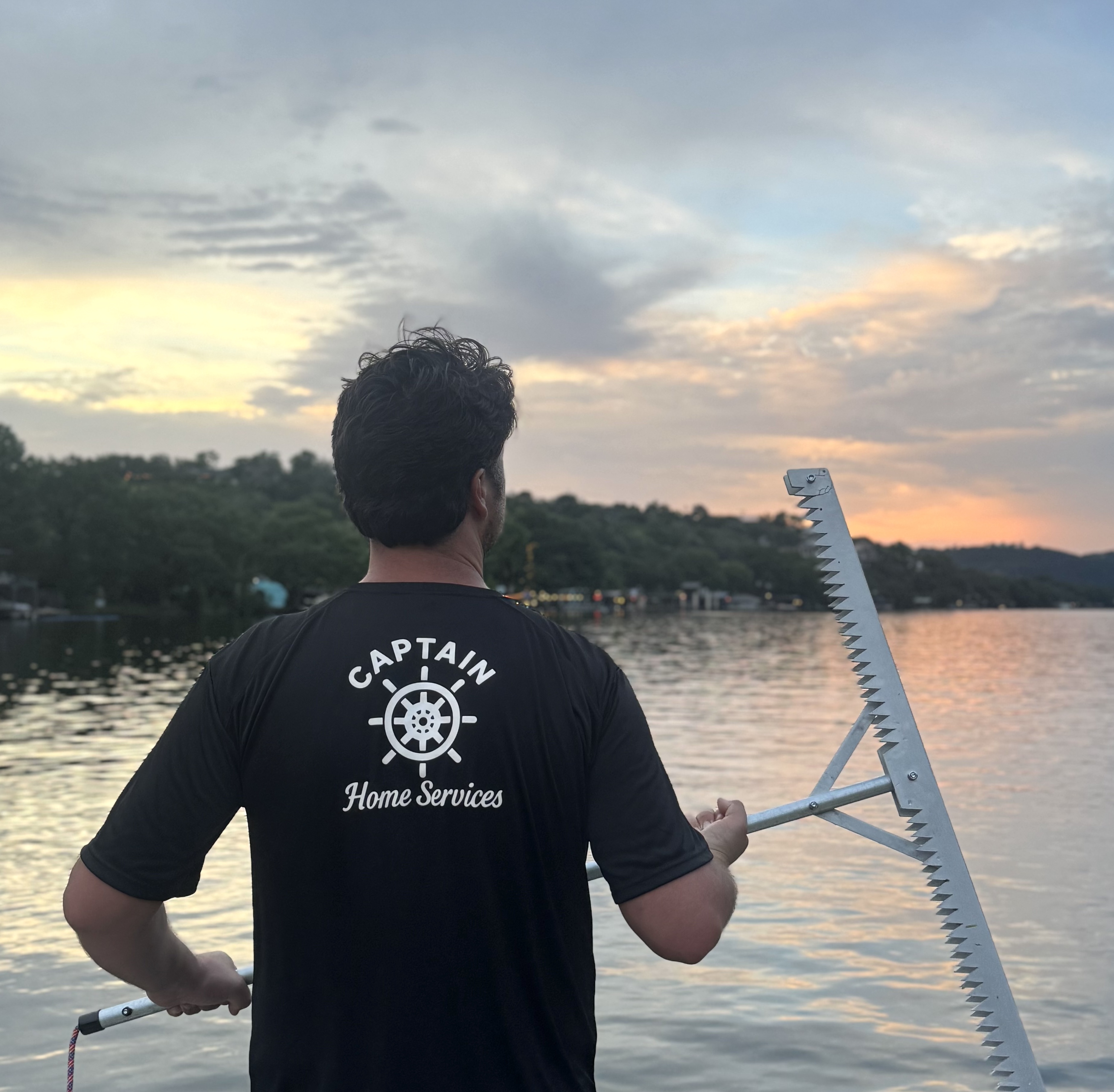
Don't waste time with a contractor who can't answer these questions.
Captain Home Services checks every box on this checklist — permitted, insured, root-based, and experienced on Lake Austin.
Get a Free Shoreline EvaluationWhy Hiring the Right Hydrilla Contractor Matters More Than You Think
Hydrilla (Hydrilla verticillata) is the most invasive aquatic plant in the United States, and it is the dominant problem on Lake Austin. A single cut fragment can produce thousands of new tubers. The root system survives cutting and regrows within weeks. Left unchecked, hydrilla forms dense mats from the lake bottom to the surface, blocking boat access, entangling swimmers, clogging pump intakes, and smothering the shoreline you bought your property to enjoy. For a deeper look at why this plant is so aggressive, read our guide to understanding hydrilla.
The method your lake austin hydrilla removal contractor uses determines whether you get lasting relief or a recurring cycle. Lake austin hydrilla cutting — slicing the plant at the stem and leaving the root — is fast and cheap, but it is the aquatic equivalent of mowing a weed without pulling it. The plant comes back, often denser, because cutting also creates fragments that drift to new areas and start new colonies. Pulling hydrilla by the root takes more labor and more skill, but it removes the plant structure that drives regrowth and dramatically slows the return cycle. For a side-by-side comparison of every approach, see our Lake Austin hydrilla management methods guide.
Beyond the biology, there is a practical and legal dimension. Lake Austin is a public waterbody managed under Texas Parks and Wildlife Department (TPWD) jurisdiction. That means austin hydrilla removal is not just a landscaping task — it is regulated work in a public waterway, and the rules exist to prevent the spread of invasive species. Permitting is not optional. A contractor who skips permits puts you — the property owner — on the hook for fines and compliance violations. For the full breakdown of what TPWD requires, read our guide to navigating permitting for aquatic vegetation removal in Texas. And the physical work itself happens in and around expensive infrastructure: boat lifts, submerged electrical conduit, lake pump intakes, and dock anchoring systems. An untrained crew can do thousands of dollars of damage in minutes.
The Checklist: Questions to Ask Any Lake Austin Hydrilla Contractor
Before you hire anyone to touch your shoreline, ask these questions. A qualified austin hydrilla contractor will answer every one of them clearly and without hesitation. If you get vague answers, deflection, or silence, that is your answer.
1. Are you permitted through TPWD?
This is the first question and the most important. Aquatic vegetation removal in public waters like Lake Austin requires TPWD permits. A legitimate lake austin hydrilla removal contractor holds the appropriate invasive aquatic vegetation removal permits and submits proposed treatment plans for approval before starting work. If a contractor tells you permits are not necessary or that they "handle it later," do not hire them. Unpermitted work can result in fines and legal liability that falls on you as the property owner — not the contractor. Learn more in our Texas aquatic vegetation permitting guide.
2. Are you insured to work underwater?
Ask specifically whether the contractor carries insurance that covers underwater and aquatic operations — not just general liability. Working around docks means navigating submerged electrical wiring, boat lift motors, lake pump intakes, and underwater infrastructure. General liability insurance that excludes aquatic work leaves you fully exposed if a crew member is injured or if your dock, pump, or lift is damaged. Request proof of insurance and read what it actually covers.
3. Are you familiar with lake pumps and dock lifts?
This is where inexperienced crews cause real damage. Lake Austin docks are packed with infrastructure that lives below the waterline: boat lift motors and cables, submerged electrical conduit, lake pump intakes and supply lines, and bulkhead anchoring systems. A contractor who does not know what to look for before entering the water can sever a pump line, disturb electrical conduit, or damage a boat lift — expensive, dangerous, and completely avoidable problems. Ask whether they survey the property before entering the water and whether they know how to work around these systems without touching them.
4. Do you cut hydrilla or pull it by the root?
This single question tells you more about the quality of the work than almost anything else. Cutting hydrilla removes the visible plant and leaves the root system fully intact. Regrowth is fast — often within weeks during peak season — and cutting creates fragments that float away and start new infestations. Pulling by the root extracts the entire plant structure, which significantly reduces regrowth and avoids spreading fragments. A contractor who only cuts is selling you a recurring service, not a solution. If you are comparing options for austin hydrilla removal, look for a lake austin hydrilla contractor who pulls by the root with minimal fragmentation. Our step-by-step process page explains exactly how root-based removal works.
5. Do you use heavy machinery?
Ask whether the contractor uses mechanical harvesters, dredges, cutters, or other heavy equipment. Lake austin hydrilla cutting with mechanical harvesters can tear up the lake bottom, create massive fragment plumes that spread hydrilla to new areas, and damage dock infrastructure. It is also loud, disruptive, and often restricted near residential shorelines. Manual removal using hand tools allows for careful extraction at the root level with minimal disturbance to the lake bottom and surrounding habitat. A contractor who relies on machinery is not necessarily incompetent, but you should understand the tradeoffs: more disruption, more fragments, and more risk to your property.
6. Do you have a trained crew?
Hydrilla removal is skilled labor. A trained crew knows how to identify hydrilla versus look-alike native plants, how to extract roots without excessive fragmentation, how to work safely around electrical and mechanical dock systems, and how to handle biomass without contaminating new areas. Ask how long the crew has been working together, whether they have experience specifically on Lake Austin, and whether the person supervising the job will be on site. A crew that was hired last week and is working unsupervised is a liability.
7. Can you remove algae too?
Many Lake Austin properties deal with both hydrilla and algae — particularly filamentous green algae that tangles through the hydrilla in spring. Ask whether the contractor can remove nuisance algae as part of the same visit. Note that toxic blue-green algae (cyanobacteria) is a separate issue handled under LCRA and City of Austin water quality monitoring, not by private contractors. But a contractor who understands the difference between nuisance filamentous algae and potentially toxic cyanobacteria is one who actually knows the lake. For more on this distinction, see our blue-green algae guide and our spring hydrilla and algae guide.
8. Will you use a boat?
This question matters for two reasons. First, a contractor who works from a boat can access your shoreline from the water without needing to enter your yard or use your dock as a staging area. Second, it means the crew is equipped to export removed biomass directly from the water rather than ruining your lawn and landscaping with wheel barrows, trailers, and tools. Ask whether they bring their own boat or expect to use yours.
9. Will you haul removed weeds through my yard?
This is the question most contractors hope you do not ask. Some crews drag soaked, heavy aquatic vegetation through your yard to reach a truck or trailer parked on the street. This can tear up turf, damage irrigation heads, stain hardscaping, and leave a mess that you have to clean up. A contractor who works from a boat and exports biomass from the water avoids this entirely. If yard access is unavoidable for your property, the contractor should tell you in advance and explain how they will protect your landscaping.
10. Will you leave the weeds on shore to dry?
Removing hydrilla from the water is only half the job. What happens to the biomass after extraction matters just as much. Some contractors pile removed vegetation on the shoreline to dry, which means it sits in the sun, rots, smells, and eventually washes back into the lake on the next rain. When it's dry it's a lot lighter but that can take 3-5 days for a small pile, over a week for a large one. It'll kill your grass or stain your dock if left to dry on there. A responsible contractor exports all removed biomass off the property entirely. Ask directly: "Where does the plant material go after you pull it out?" If the answer is "we leave it on shore," keep looking.
11. Do you have photos of other work on Lake Austin?
Ask for photos of completed projects on Lake Austin specifically — not stock images, not photos from another lake in another state. A contractor who has done real work on Lake Austin should be able to show before-and-after results from properties on this lake. Photos tell you three things: that the contractor has actually worked here, that they understand the local conditions, and that they stand behind their work enough to document it. If they cannot produce photos of Lake Austin work, that is a red flag regardless of what else they claim. You can see our own process photos for reference.
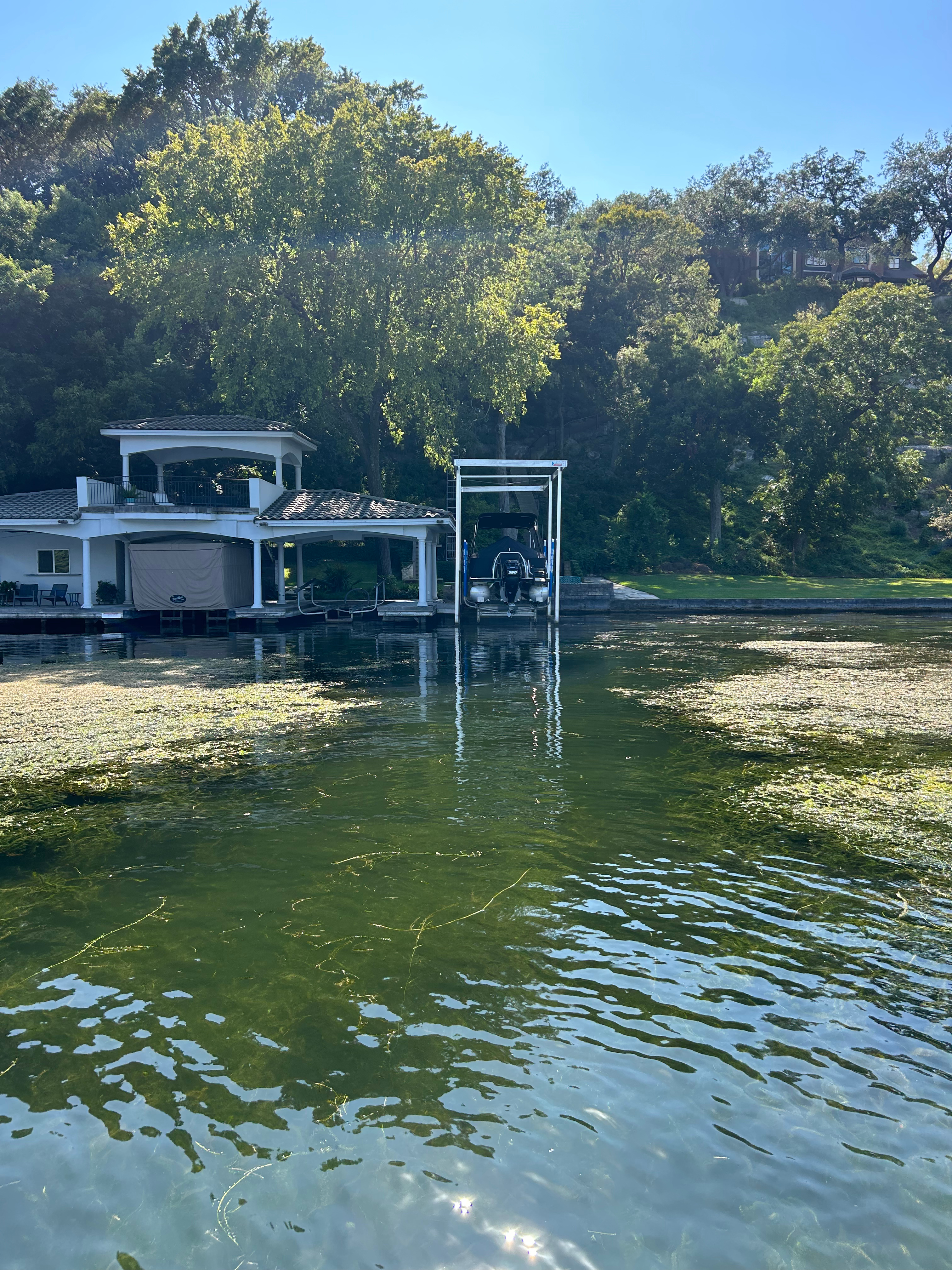
Still not sure who to trust with your shoreline?
We'll walk your property, assess the hydrilla, and give you a straight quote — no pressure, no cutting, no machinery through your yard.
Request Your Site VisitRed Flags: When to Walk Away
Beyond the checklist, there are a few signs that should end the conversation immediately:
- No TPWD permit and no plan to get one. This is non-negotiable. Walk away.
- Insurance that does not cover underwater or aquatic work. You are assuming the risk, not them.
- "We just cut it — it grows back anyway." This tells you the contractor's business model depends on your problem coming back.
- No photos of Lake Austin work. If they have never worked this lake, they do not know its conditions.
- Vague answers about yard access and biomass disposal. If they cannot tell you where the weeds go, the answer is probably your lawn.
- No mention of dock systems, pump intakes, or electrical hazards. A contractor who does not bring these up proactively has not thought about them.
What a Qualified Lake Austin Hydrilla Contractor Looks Like
For comparison, here is what a properly qualified lake austin hydrilla contractor should be able to tell you:
- They hold TPWD permits for invasive aquatic vegetation removal and submit treatment plans for approval.
- They carry insurance that specifically covers underwater and aquatic operations.
- They survey every property for dock infrastructure — boat lifts, electrical conduit, pump intakes, bulkhead anchoring — before anyone enters the water.
- They pull hydrilla by the root using hand tools, not heavy machinery, to minimize fragmentation and lake-bottom disturbance.
- They have a trained crew with experience on Lake Austin specifically.
- They can remove nuisance filamentous algae alongside hydrilla and understand the difference between nuisance algae and toxic cyanobacteria.
- They work from a boat and export all removed biomass off the property — nothing left on shore to rot and wash back in.
- They do not need yard access in most cases and will tell you in advance if they do.
- They have before-and-after photos of completed work on Lake Austin.
That is the standard. Anything less is a gamble with your property, your shoreline, and your wallet. For more context on why aquatic vegetation removal matters for a healthy lakefront, read our dedicated guide.
Want a contractor who already meets this standard?
Captain Home Services is permitted, insured, and trained for Lake Austin hydrilla removal — root-based, no heavy machinery, no yard damage.
Schedule Your EvaluationHow Much Does Lake Austin Hydrilla Removal Cost?
Pricing depends on the scope of the job. Maintenance visits — keeping a manageable area clear — typically start around $600. Dense infestation clearouts — reclaiming a heavily overgrown shoreline — start around $1,800 and scale based on water depth, infestation density, shoreline width, and how far the hydrilla extends from your dock into the lake. Every property is different, so the most accurate pricing comes from a site evaluation. For more detail on pricing factors, see our lake weed removal FAQ and our guide to manual aquatic weed removal.
Ready for a straight quote on your shoreline?
Tell us about your property and we'll give you honest pricing with no surprises — no pressure, no cutting, no machinery.
Get Your Quote TodayWhy Root-Based Removal Is the Standard That Matters
If you take one thing from this guide, let it be this: the difference between cutting and root-based removal is the difference between renting a solution and owning one. Lake austin hydrilla cutting is fast, cheap, and temporary. It leaves the root system, creates fragments, and guarantees the contractor a return visit. Root-based manual hydrilla pulling takes more time and skill, but it removes the plant structure that drives regrowth, reduces fragment spread, and gives you the longest possible window of clear water before any maintenance is needed again. For the sustainability case behind manual removal, read our article on why manual aquatic weed removal is a sustainable approach.
No method permanently eradicates hydrilla from a lake — it is too aggressive and too well-established in Lake Austin for that. But the method your austin hydrilla contractor uses determines whether you get months of relief or weeks, whether the problem spreads to your neighbor's dock, and whether the removed biomass stays out of the lake or ends up right back in it. That is why austin hydrilla cutting alone is not a real solution — and why experienced lake austin hydrilla removal contractors focus on root extraction instead. For the full landscape of options, see our Lake Austin hydrilla management methods breakdown.
Ready to Talk to a Contractor Who Checks Every Box?
If you are on Lake Austin, Lake Travis, or anywhere in the Highland Lakes and want to talk through what a qualified lake austin hydrilla removal approach looks like for your property, reach out. We will evaluate your shoreline, explain the process, and give you a straight quote — no pressure, no cutting, no machinery dragged through your yard. You can also learn more about how our process works, browse our complete Lake Austin weeds guide, read our lake weed removal FAQ, or explore our full blog archive for the full picture.
This article is intended to help property owners evaluate contractors and understand the hydrilla removal process. For current TPWD permitting requirements, contact Texas Parks and Wildlife Department directly or read our permitting guide. Captain Home Services provides permitted, insured, root-based hydrilla removal for residential properties on Lake Austin, Lake Travis, and the Highland Lakes. Learn more about our team or get in touch for a quote.