
Austin Lake Management
If you own lakefront property in Central Texas, invasive aquatic weeds like hydrilla can quickly interfere with swimming, boating, docks, shoreline access, and lake pumps. Below is a comprehensive FAQ answering the most common questions we receive about lake weed removal, hydrilla, benthic barriers, pricing, and how our services differ from other companies.
This guide is designed to be transparent, educational, and practical—so you know exactly what to expect.
Ready to Reclaim Your Waterfront?
Schedule a free consultation today to discuss your specific lake weed challenges and get a custom quote for your property.
Get a Quote TodayQuick Navigation
- 1. What kinds of aquatic weeds do you remove?
- 2. What is hydrilla and why is it such a problem?
- 3. Why don't you cut weeds?
- 4. Do you use divers or heavy machinery?
- 5. Do you work on lake pumps?
- 6. Are you insured?
- 7. What does your removal process look like?
- 8. How much does hydrilla removal cost?
- 9. How soon will weeds grow back?
- 10. What are benthic barriers?
- 11. Do you use herbicides?
- 12. Will your work harm fish or wildlife?
- 13. Do you need yard access?
- 14. Do I need to be home?
- 15. Do you guarantee weeds won't come back?
- 16. How do you identify hydrilla?
- 17. Do I need a permit?
1. What kinds of aquatic weeds do you remove?
We specialize in removing rooted aquatic weeds, particularly invasive species such as hydrilla, that interfere with docks, swim areas, and shoreline access.
We focus exclusively on physical, root-based removal. We do not cut weeds at the surface, and we do not provide services that leave roots or fragments behind. Our goal is to remove as much of the plant—including the root system—as possible to reduce regrowth.
Learn more about the benefits of manual aquatic weed removal and why root-based methods are more effective than cutting.
2. What is hydrilla and why is it such a problem?
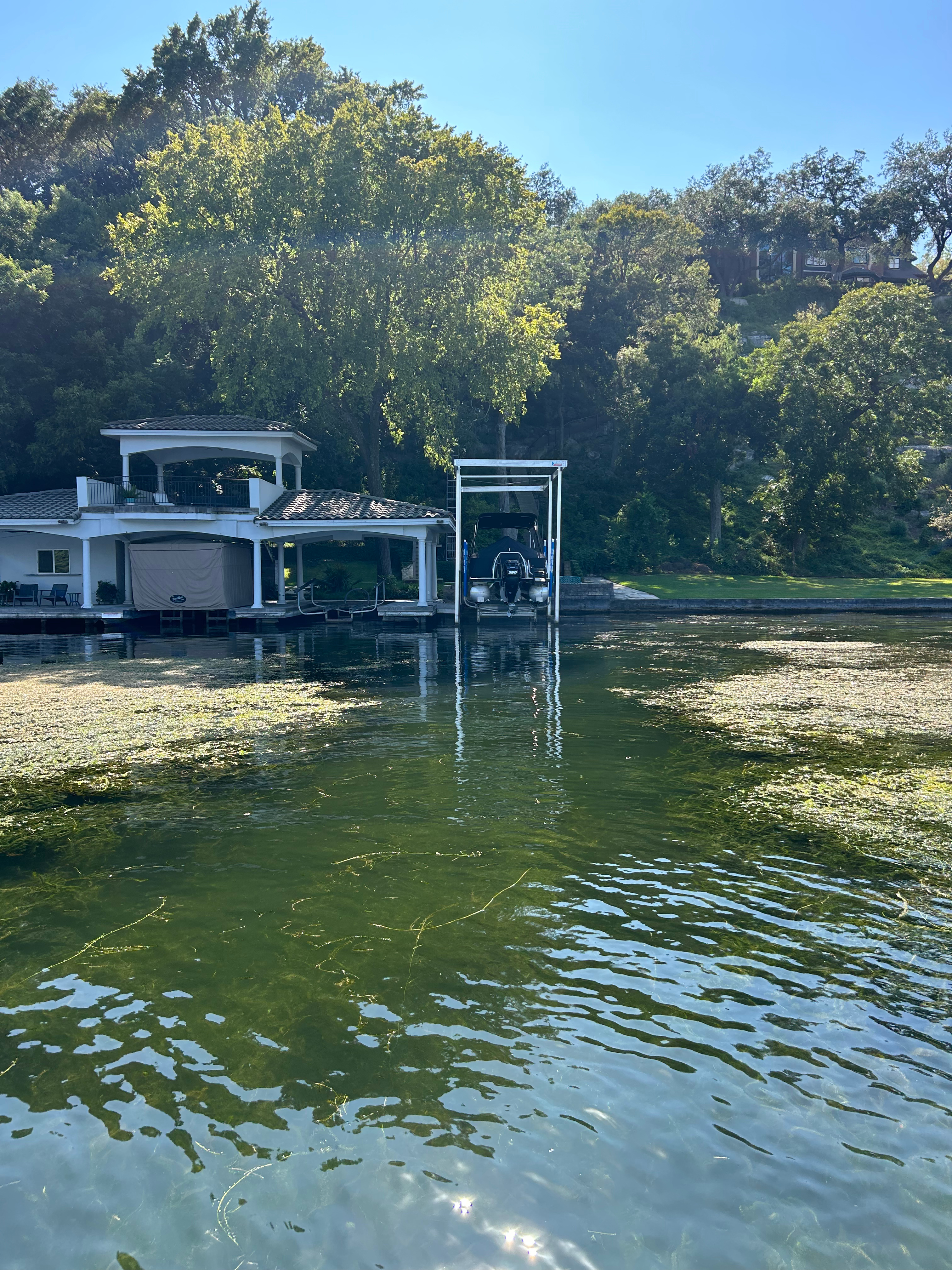
Hydrilla (Hydrilla verticillata) is a highly invasive, non-native aquatic plant that spreads aggressively in Texas lakes. It forms dense underwater mats, grows rapidly toward the surface, and can block access to docks, boat lanes, swimming areas, and shoreline intakes.
Hydrilla spreads easily through fragments. Even small pieces left behind can regrow into new plants, which is why improper removal methods often make the problem worse rather than better.
For an in-depth look at this invasive species, read our guide: Understanding Hydrilla: The Most Invasive Aquatic Weed in Austin Lakes.
3. Why don't you cut weeds like other lake weed removal companies?
Cutting weeds removes only the visible portion of the plant and leaves the root system intact. With invasive species like hydrilla, cutting also creates fragments that can float away and establish new infestations.
Our approach focuses on manual root extraction, which significantly reduces regrowth compared to cutting alone. While no method can permanently eliminate hydrilla from a lake, removing the plant by the root provides longer-lasting results and avoids fragment-driven spread.
Discover more about our sustainable approach to aquatic vegetation management.
4. Do you use divers or heavy machinery?
No.
- We do not use divers
- We do not use mechanical harvesters
- We do not use cutters, dredges, or heavy equipment
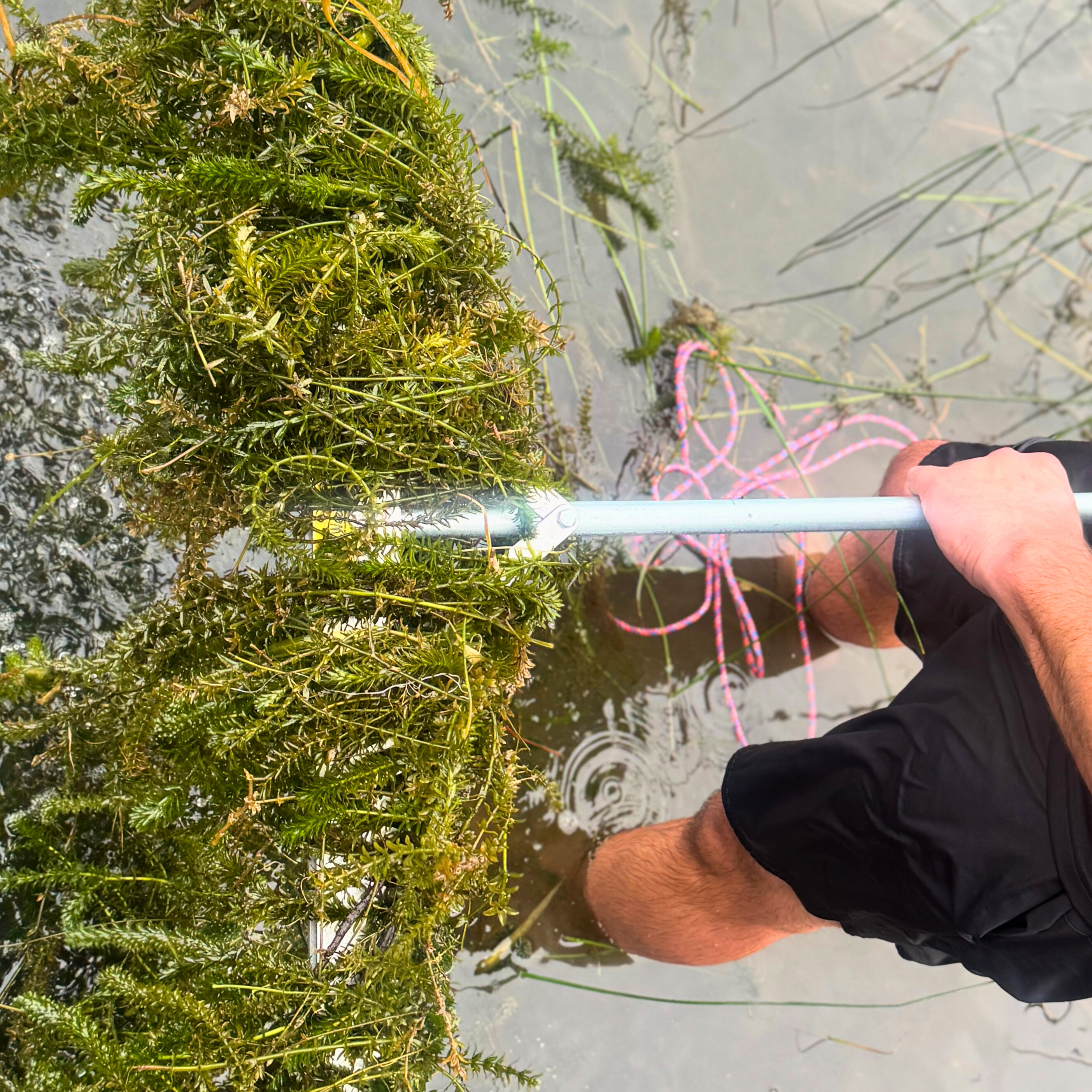
All weed removal is done manually using hand tools such as rakes, allowing us to extract weeds carefully by the root while minimizing fragmentation and disturbance to the lake bottom.
5. Do you work on lake pumps or pump intake systems?
No.
We do not service, repair, or install lake pumps or pump intake systems.
If weeds are growing around a pump intake, we can manually remove vegetation in that area up to—but not including—the pump hardware itself. Any mechanical or electrical pump work should be handled by a licensed pump or irrigation contractor.
6. Are you insured?
Yes.
Austin Lake Management is fully insured for aquatic weed removal services. Our insurance covers on-site operations and vegetation removal work. Proof of insurance can be provided upon request.
7. What does your weed removal process look like?
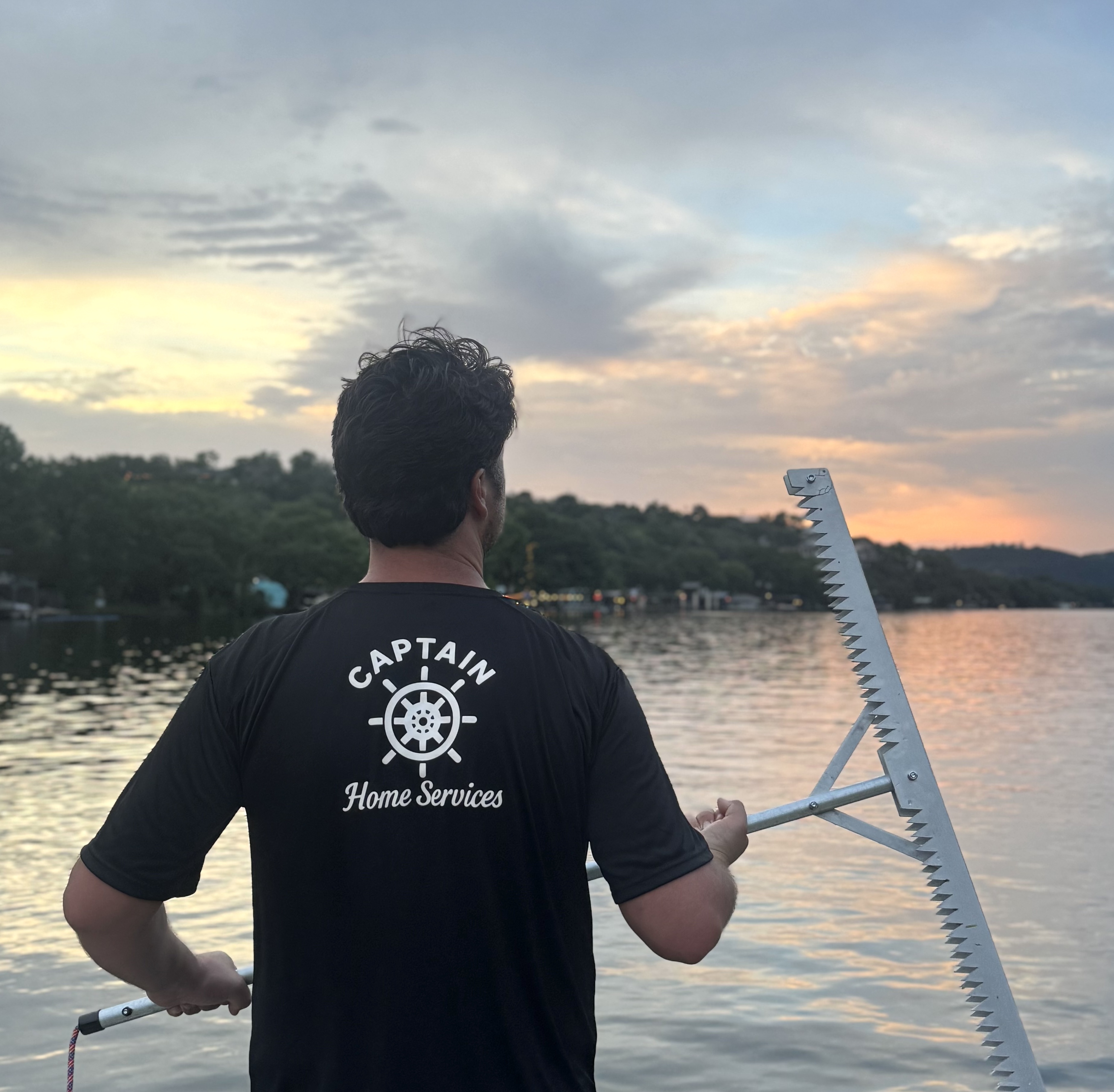
Our process is straightforward and site-specific:
- a) Evaluate the infestation (dock area, swim zone, shoreline edge, cove, etc.)
- b) Identify weed type and growth pattern
- c) Manually extract weeds by the root using hand tools
- d) Remove as much of the plant material as possible, collect it, and remove it from the water
Because invasive aquatic weeds grow in complex root networks and sediment conditions vary, it is not possible to remove every single plant. We can often get very close, but complete eradication is not realistic in open water systems. Our goal is to remove as much biomass and root structure as possible to significantly reduce regrowth and restore usable water areas.
Want to see our process in action? Learn how it works or view examples of our completed projects on the homepage.
8. How much does hydrilla removal cost?
For hydrilla removal, pricing reflects the two most common scenarios we encounter:
- Maintenance visits (keeping a manageable area clear) — starting at $600
- Dense infestation clearouts (reclaiming a heavily overgrown area) — starting at $1,800
Every bid is custom because no two properties are the same. The factors we evaluate are:
- Water depth — deeper water takes longer and is more physically demanding
- Infestation density — thick mats require significantly more labor than scattered growth
- Hazards — submerged obstacles, boat traffic, or dock structures
- Shoreline width — the total linear feet of frontage being cleared
- Infestation length — how far the hydrilla extends out from your dock into the lake
The best way to get an accurate number is a quick site evaluation. Contact us and we'll take a look at your property and give you a straight quote.
9. How soon will weeds grow back after removal?
Regrowth timelines vary widely and depend on several factors:
- Water depth (shallow areas regrow faster)
- Sunlight exposure
- Seasonal growth conditions
- Nearby infestations that can spread fragments
In shallow, sunny areas during peak growing season, regrowth can occur in 2–3 months. In deeper water or during slower growth periods, regrowth may take 4–6 months or longer.
Root-based removal slows regrowth significantly compared to cutting, but hydrilla is persistent and ongoing monitoring is recommended.
Learn more about understanding lake weeds and why they grow.
10. What are benthic barriers and how do they work?
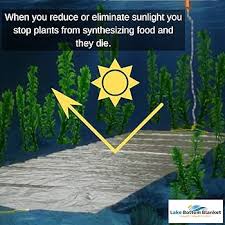
Benthic barriers are weighted, permeable mats installed on the lake bottom to block sunlight and suppress new plant growth. They are commonly used around docks, swim zones, and high-use shoreline areas.
Key points about benthic barriers:
- They prevent new growth by blocking light
- They do not rely on chemicals
- They are best used in targeted areas, not entire shorelines
- Proper sizing, anchoring, and placement are critical
Benthic barriers are often most effective when combined with initial weed removal, followed by barrier installation to prevent regrowth in priority areas.
For a deeper explanation, see our complete guide to benthic barriers and explore our benthic barrier services page.
11. Do you use herbicides or chemicals?
No.
We do not use chemical herbicides or aquatic pesticides. Our services are entirely physical and manual, avoiding chemical exposure to fish, wildlife, and water users.
Read more about the importance of aquatic vegetation removal for a healthy lakefront.
12. Will your work harm fish or wildlife?
Our hand-tool, root-based approach is designed to be low-impact. Because we avoid chemicals and heavy machinery, there is minimal disturbance to sediment, oxygen levels, and aquatic habitat.
13. Do you need access to my yard?
In most cases, no.
We perform the majority of our work from our boat, accessing problem areas directly from the water. In some situations—such as hard-to-reach areas—we may work from the dock, but we generally do not need to enter your yard.
If special access is required, we'll discuss it with you in advance.
14. Do I need to be home during the service?
No.
As long as we have dock or water access and prior approval, you do not need to be present during the work.
15. Do you guarantee weeds won't come back?
We do not offer permanent guarantees against regrowth. Invasive aquatic weeds like hydrilla can return due to environmental factors beyond any contractor's control.
What we do guarantee is that we remove weeds using methods proven to reduce regrowth more effectively than cutting alone and without introducing chemicals into the water.
16. How do you identify hydrilla versus other aquatic plants?
Hydrilla is identified by its distinctive growth pattern, including whorled leaves with small teeth along the midrib and dense underwater growth. If needed, we can assist with identification using photos or an on-site evaluation.
Check out our detailed guide: Understanding Hydrilla: The Most Invasive Aquatic Weed in Austin Lakes.
17. Do I need a permit for aquatic weed removal in Texas?
We hold invasive aquatic vegetation removal permits and submit and obtain approval for proposed treatment plans through Texas Parks and Wildlife Department (TPWD), which is required for weed removal in public waters like Lake Austin.
For detailed information about permitting requirements, see our guide: Navigating Permitting for Aquatic Vegetation Removal in Texas.
Final Note

Lake weed problems are rarely solved with a one-size-fits-all approach. Effective management depends on proper identification, appropriate removal methods, and realistic expectations about regrowth.
If you're dealing with hydrilla or other rooted aquatic weeds and want a solution focused on root removal—not cutting, Austin Lake Management is here to help.
Don't Let Invasive Weeds Take Over Your Waterfront
Contact us today to schedule a consultation and take the first step toward a clearer, cleaner lake. We serve lakefront properties throughout Central Texas and provide custom solutions tailored to your property's unique challenges.
Related Topics: lake weed removal FAQ, hydrilla questions, benthic barriers, aquatic weed removal cost, lake weed removal pricing, manual weed removal, austin lake management, lake weed regrowth, hydrilla control methods, lake maintenance, invasive species control, eco-friendly weed removal