If you've seen news coverage of dog deaths on Lady Bird Lake or spotted a dark, paint-like film clinging to the rocks near your dock, you've already encountered Central Texas's most serious water-safety problem: toxic blue-green algae, more accurately called cyanobacteria. Unlike the hydrilla and filamentous algae we cover in our Lake Austin weeds guide, cyanobacteria isn't a nuisance plant. It's a bacteria capable of producing some of the most potent natural toxins known, and it has appeared in Austin-area lakes every single year since 2019. This guide walks through what it is, how to spot it, why it keeps showing up, and what the real health risks are for you, your family, and your dog.
What Blue-Green Algae Actually Is
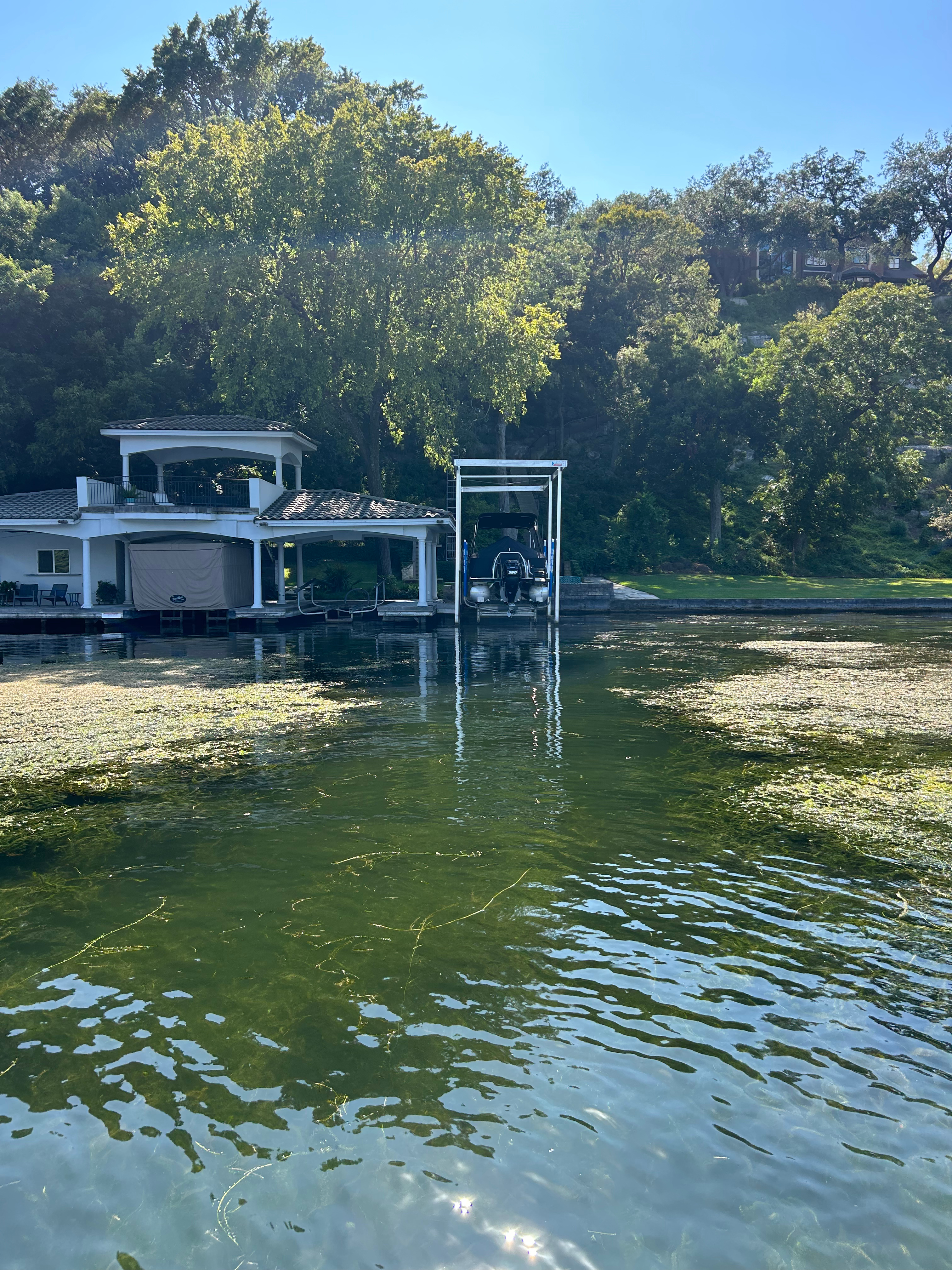
Despite the name, blue-green algae isn't algae at all. It's cyanobacteria — a type of photosynthetic bacteria that has existed on Earth for billions of years and is biologically distinct from the filamentous green algae discussed in our spring hydrilla guide. That distinction matters more than it might seem. True algae like the stringy, fibrous green growth you see tangled through hydrilla are generally a nuisance — visually unpleasant, ecologically disruptive, but not dangerous. Cyanobacteria, on the other hand, can manufacture cyanotoxins, chemical compounds capable of causing serious illness or death in pets, wildlife, and humans.
Cyanobacteria exists naturally in Central Texas lakes at low, harmless background levels. The danger arises when conditions allow it to "bloom" — reproducing rapidly enough to form visible mats, surface scums, or unusual discoloration across the water. Those blooms are what get lakes closed, what kill dogs, and what have kept Austin water managers on alert since the summer of 2019.
How to Identify It on Lake Austin
Cyanobacteria can be genuinely difficult to tell apart from harmless algae by sight, which is exactly why every regional agency — the City of Austin, LCRA, and TPWD — advises treating all algae as potentially dangerous rather than trying to make a field call. That said, there are patterns worth recognizing.
The most reliable visual sign is a surface layer that looks less like plant growth and more like something was spilled in the water. Think dark green or blue-green paint. Thick, gelatinous blobs rather than the fibrous, hair-like texture of filamentous green algae. Discoloration that pools near shorelines, calm coves, and boat landings rather than spreading evenly across open water. A strong musty or rotten-egg odor, especially as a bloom ages and begins to die back.
Austin's Watershed Protection Department has documented recurring cyanobacteria at Red Bud Isle and the Barton Springs backwater area on Lady Bird Lake, and at Walsh Boat Landing on Lake Austin. LCRA monitors for cyanotoxins across Lake Buchanan, Inks Lake, Lake LBJ, Lake Marble Falls, and Lake Travis, and documented a significant benthic mat event on Lake Travis in March 2021.
The most important thing to understand is that toxin production cannot be detected by sight, smell, or touch. Only laboratory testing confirms whether a bloom is actively toxic. A patch that looks harmless on Monday can produce dangerous levels of toxin by Wednesday. The guidance from every agency is consistent: if it looks like algae, avoid it entirely and keep your pets out of the water.
Why It Keeps Showing Up in Central Texas Lakes
Cyanobacteria has been a near-constant presence in Austin-area waterways since a cluster of dog deaths on Lady Bird Lake in 2019 put the issue on the public radar. Understanding why it keeps returning comes down to a few compounding environmental factors.
The root cause is nutrient pollution — specifically excess nitrogen and phosphorus entering the water. According to LCRA and the CDC, these nutrients effectively fertilize the lake. The initial 2019 bloom has been linked to major upstream flooding that washed fertilizer runoff and septic waste into local waterways. Ongoing contributors around Lake Austin and the Highland Lakes include lawn and garden fertilizer washed through storm drains and creeks, failing or aging septic systems near the shoreline, pet waste left near the water, yard clippings and grass cuttings entering waterways, and construction runoff that isn't properly managed.
This nutrient connection is also why the method used for aquatic vegetation removal matters more than many property owners realize. When lake weeds are cut and left to decompose in the water rather than exported, they release those same nitrogen and phosphorus compounds back into the water column — directly fueling the next generation of algae growth. It's a cycle that cutting alone can't interrupt.
Beyond nutrients, cyanobacteria thrives in warm, stagnant water — exactly the conditions that define Central Texas coves and backwater areas through the summer. Drought amplifies this: low rainfall means less flow through the lake system, nutrients concentrate, and water temperatures climb. Add abundant sunlight hitting shallow, calm coves, and the conditions for a bloom are essentially perfect from May through August. Researchers have also noted that warmer-than-average years push bloom season earlier — Austin's Watershed Protection Department has recorded blooms appearing in March and April in recent years, months ahead of the historical peak.
The Real Health Risks: Humans and Dogs
This is the critical difference between blue-green algae and everything else we deal with on Lake Austin. Cyanotoxins are genuinely dangerous, not just an eyesore.
Different cyanobacteria species produce different toxins, and a single bloom can contain more than one. Microcystins and nodularins are hepatotoxins and nephrotoxins that attack the liver and kidneys. Cylindrospermopsin causes similar liver and kidney damage. Anatoxins, guanitoxin, and saxitoxins are neurotoxins that cause muscle twitching and, at high doses, progressive paralysis. Testing on Lady Bird Lake and connected springs has specifically identified anatoxin-a, a fast-acting neurotoxin, alongside the more commonly discussed microcystins.
For people, exposure can happen by swallowing contaminated water, through skin contact, or by inhaling airborne droplets near a bloom. Symptoms range from skin and eye irritation and rashes to gastrointestinal illness, respiratory problems, and in serious cases, liver damage or neurological effects. In 2021, the City of Austin closed Barton Creek and Sculpture Falls after a human swimmer became ill and toxins were confirmed in the water. If you or a family member develop symptoms after lake contact, call a healthcare provider or the Texas Poison Center Network at 1-800-222-1222.
Dogs face a substantially higher risk than humans. They're more likely to wade directly through algae mats, drink from the lake, and then lick the residue off their fur afterward — a triple exposure route. Since 2019, cyanobacteria has been linked to the deaths of at least six dogs in the Austin area, with additional cases on Lake Travis. LCRA reports that symptoms in dogs can appear within minutes of exposure and include vomiting, seizures, and in the worst cases, death. There is no antitoxin. Treatment is limited to managing symptoms as they develop, which makes prevention the only meaningful protection your dog has.
What to Do to Keep Your Family Safe
The practical guidance from LCRA, the City of Austin, and the CDC comes down to one rule: don't try to judge whether a specific patch is safe. Avoid all contact with algae mats, scum, and unusually discolored water. Stay out of warm, stagnant, or murky coves and backwater areas, especially during hot months. Keep dogs out of any water that looks suspicious and bring clean water from home for them to drink. If your dog goes in the water anywhere on Lake Austin, rinse them off before they can lick their fur. Wash and dry wetsuits and swimwear after any contact with a bloom, since residue can prolong exposure. After significant rainfall, give it at least three days before recreating near shoreline areas, since runoff spikes nutrient levels and bacteria counts. Watch for secondary warning signs too — dead or distressed fish, foam that clings to surfaces instead of dispersing, and strong odors are all reasons to give an area a wide berth.
The Connection Between Lake Weeds and Algae Blooms
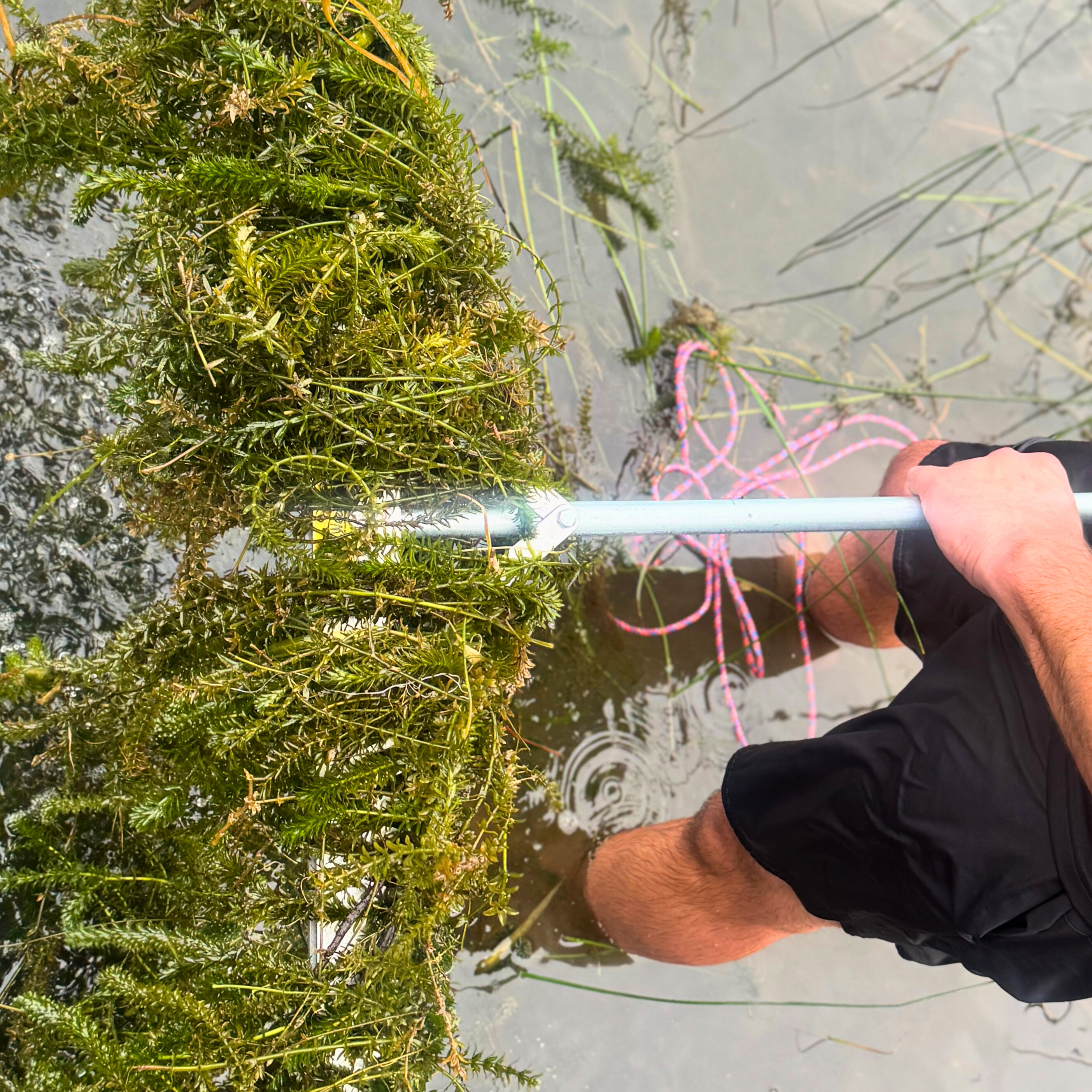
There's a direct link between the hydrilla problem on Lake Austin and the blue-green algae problem, and it runs through the same thing: excess nutrients in the water. When aquatic vegetation is cut and left to decompose in the lake rather than removed, that plant material breaks down and releases nitrogen and phosphorus back into the water column. Those are exactly the nutrients cyanobacteria needs to bloom. The more biomass left to rot in the water, the more the lake gets fertilized.
This is one of the reasons we focus on root-based removal with full biomass export rather than just cutting. We extract the plant at the root level and take everything out of the water — no material left behind to decompose and feed the next growth cycle. It's a more labor-intensive approach, but it's one that actually addresses the nutrient loading that drives both the weed problem and the algae problem at the same time.
Captain Home Services doesn't treat cyanobacteria directly — that falls under LCRA and the City of Austin's water quality programs. But our permitted hydrilla and algae removal work is part of the larger nutrient-management picture for a healthy shoreline. If you're dealing with heavy weed growth near your dock and want to understand what responsible removal looks like for your property, reach out and we'll take a look.
Common Questions About Blue-Green Algae on Lake Austin
People ask us about this frequently, so here are straightforward answers to the questions we hear most often.
The most common question is whether blue-green algae is the same as the filamentous green stuff that grows on hydrilla in spring. It isn't. Filamentous green algae — species like Spirogyra and Cladophora — is true algae and is generally not toxic. It's a nuisance. Blue-green algae is cyanobacteria, a fundamentally different organism, and it can produce toxins that kill dogs. The two look different, behave differently, and require completely different safety responses. For more on how to tell them apart, see our spring hydrilla and algae guide.
The second most common question is how to tell if the algae you're looking at is toxic. The honest answer is that you can't. Cyanotoxins are invisible and odorless in the concentrations that cause harm. The only way to confirm toxicity is laboratory testing. Treat any unusual algae growth as potentially dangerous.
People also ask when to expect blooms. Historically, the peak window is late May through early August on Lake Austin, but recent years have pushed blooms as early as March. If you're planning to swim, check current conditions with LCRA or the City of Austin before getting in.
For dog owners specifically: yes, your dog can get sick from swimming near algae without drinking it, because they lick their fur after getting out. Rinsing immediately — before they can lick — is the key precaution. And if there's any chance of exposure, call a vet right away. Symptoms move fast. There's no antidote.
Finally, people ask whether cutting hydrilla makes algae worse. It can, if the cut material is left in the lake to decompose. That decomposition releases nutrients that fuel algae growth. Removal methods that take biomass completely out of the water — the approach we use — help break that cycle rather than perpetuate it.
What This Means for Lake Austin Lakefront Owners
Blue-green algae isn't going away from Central Texas lakes. The conditions that produce it — warm temperatures, summer drought, ongoing nutrient loading from the surrounding watershed — are structural features of this environment. What you can control is what happens at your shoreline.
Keeping invasive vegetation like hydrilla managed through methods that remove rather than redistribute biomass reduces the nutrient load coming from your property. Keeping shoreline buffers intact, managing pet waste near the water, inspecting septic systems, and being thoughtful about fertilizer use all make a real difference at the property scale. None of these actions fixes a lake-wide problem, but they do reduce your contribution to it.
If you're on Lake Austin, Lake Travis, or elsewhere in the Highland Lakes and want to talk through what a responsible vegetation management approach looks like for your property, we're happy to take a look and give you a straight answer. Understanding the full picture — weeds, algae, nutrients, permitting — is part of how we try to be useful to people who actually live on these lakes.
This guide is intended for general safety awareness and does not replace official monitoring or health guidance. For current water conditions, contact LCRA or the City of Austin's Watershed Protection Department. If you or a pet develop symptoms after lake contact, call a healthcare provider, veterinarian, or the Texas Poison Center Network at 1-800-222-1222. Captain Home Services provides permitted, root-based hydrilla and nuisance algae removal for residential properties on Lake Austin, Lake Travis, and the Highland Lakes. Learn more about our process or contact us directly.