October 16, 2025 - The hydrilla situation on Lake Austin has reached critical levels this fall, with recent surveys revealing the invasive aquatic weed now covers nearly 456 acres of the lake. This represents a dramatic escalation from earlier in the year and approaches the historic peak of over 500 acres seen in 2012-2013.
Quick Navigation
What's Happening Right Now on Lake Austin

If you've noticed significantly more aquatic vegetation in your cove or around your dock this summer, you're not alone. According to the City of Austin's latest announcements and Texas Parks and Wildlife Department (TPWD) survey data from September 2025, the Lake Austin hydrilla problem has accelerated rapidly:
The spike has been particularly noticeable since June, when hydrilla covered less than 5% of the lake. Now it's expanded to approximately 30% coverage in just a few months, concentrating primarily in coves and backwaters downstream of Loop 360. 1
Why This Matters for Austin Lakefront Property Owners

Dense hydrilla growth isn't just an eyesore—it creates serious problems for everyone who lives on or enjoys Lake Austin:
Recreation Impact
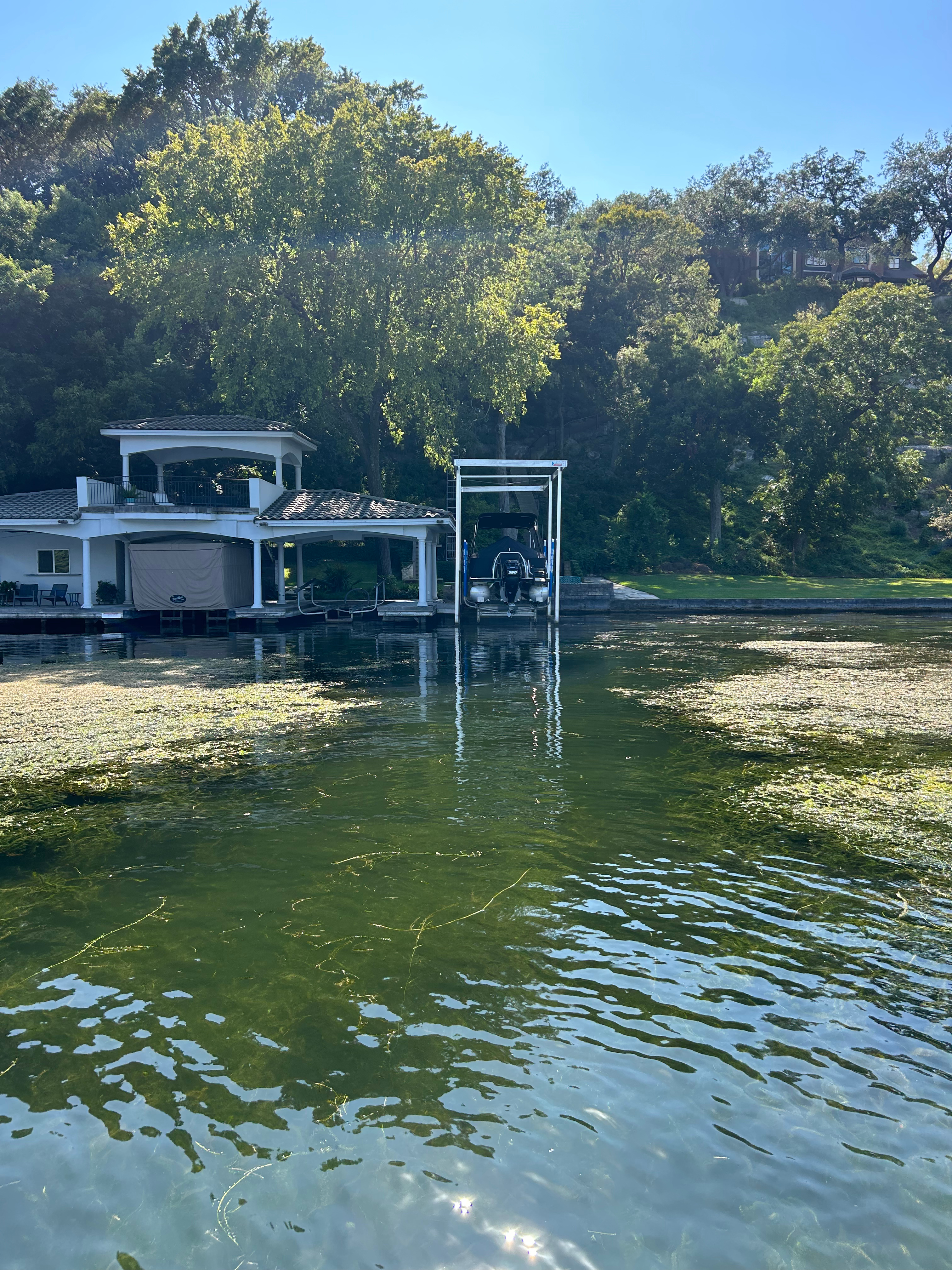
Thick mats of hydrilla make swimming dangerous and unpleasant, tangle boat propellers, and prevent access to the water from docks and boat lifts. Many waterfront homeowners report being unable to use their properties for the recreational activities they purchased them for.
Property Values
Research consistently shows that heavy aquatic weed infestations can decrease lakefront property values by 10-20% or more. When potential buyers see a weed-choked waterfront, they move on to clearer properties.
Ecosystem Health
While some aquatic vegetation is beneficial and necessary for fish habitat and water quality, excessive growth—especially of invasive species like hydrilla—disrupts the ecological balance. Dense vegetation blocks sunlight to native plants, and when it dies and decomposes, it consumes oxygen that fish need to survive.
The City's Response: More Grass Carp Coming This Fall
Following the alarming TPWD survey results, the City of Austin has announced plans to stock additional sterile grass carp into Lake Austin later this fall. This comes after the city already released approximately 350 grass carp in July 2025. 2
How Grass Carp Management Works
Grass carp are herbivorous fish that feed on aquatic vegetation, with hydrilla being one of their preferred food sources. The City plans to maintain a conservative stocking rate of five grass carp per acre of hydrilla—a rate designed to reduce invasive weeds while minimizing impact on beneficial native vegetation. 1
According to local news reports from KVUE 3 and KXAN 4, city officials emphasize that grass carp are "the most environmentally responsible tool available\" for managing hydrilla at a lake-wide scale.
Lessons from Past Management Efforts
The city is taking a measured approach this time, having learned from the 2021 stocking when roughly 56,700 sterile grass carp were added to Lake Austin. That aggressive stocking eliminated nearly all vegetation, and it took several years for beneficial native plants to recover. 1
Austin Watershed Protection Department officials have made it clear they don't expect immediate reductions in hydrilla. Instead, they anticipate making sustained progress over time as the grass carp population establishes and begins feeding consistently.
Community Concerns and Alternative Solutions Considered
Many Lake Austin residents have asked about lowering the lake level temporarily to help control hydrilla. While this approach has proven effective against Eurasian watermilfoil (another problematic aquatic weed), research suggests it's actually counterproductive for hydrilla management.
According to city officials quoted in recent Hoodline coverage 5, lowering the lake could eliminate less problematic native species that compete with hydrilla, potentially allowing the invasive weed to spread even more aggressively once water levels return to normal.
The city's stated goal: "slow down the growth of hydrilla and reduce its density without having a negative impact on the lake's environment." 1
What Lakefront Property Owners Can Do Now
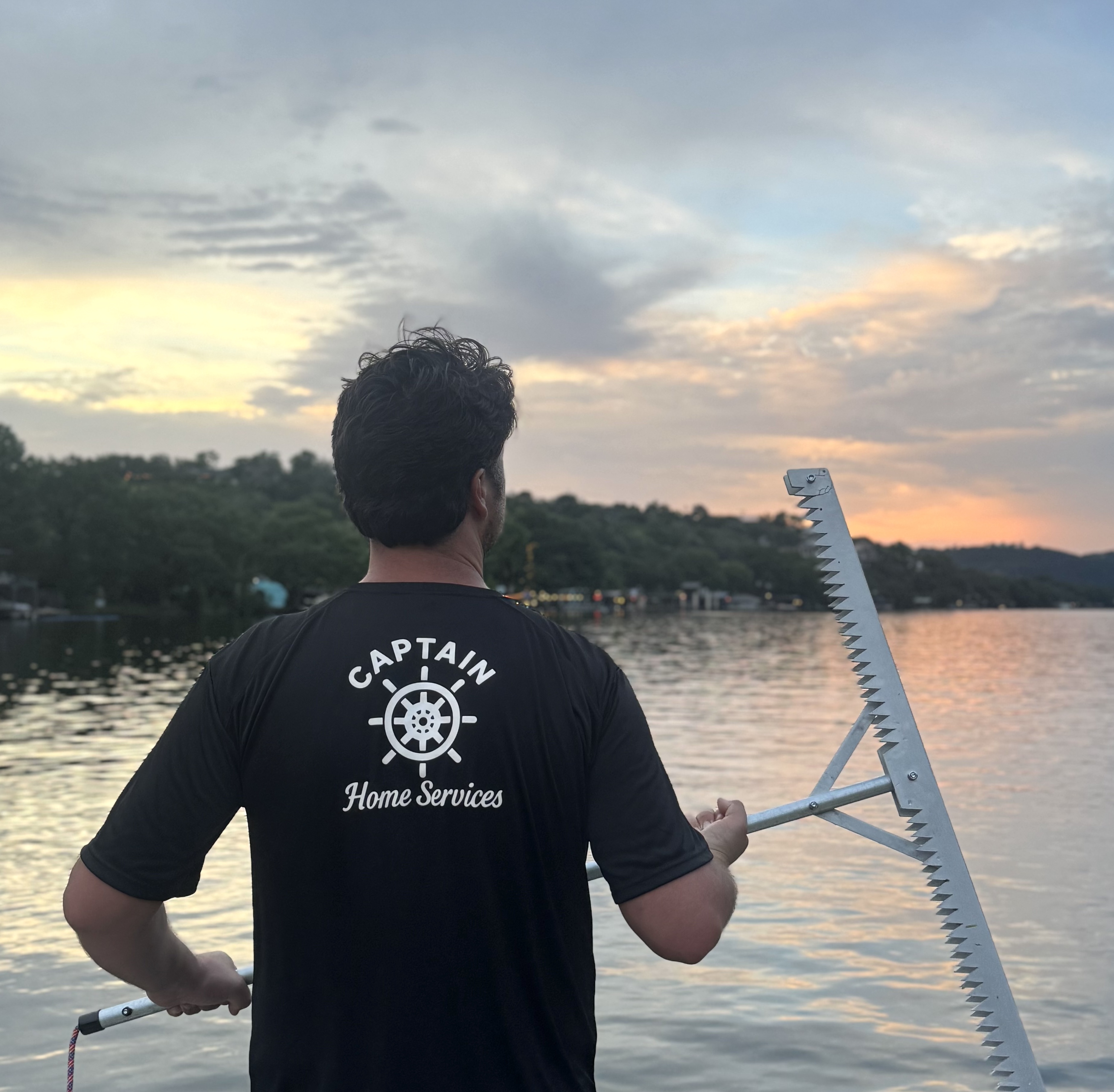
While the city manages lake-wide vegetation with grass carp, individual property owners don't have to wait months or years for relief around their docks, swimming areas, and boat lifts.
Manual Removal: The Most Effective Local Solution
Captain Home Services specializes in precision manual aquatic vegetation removal that provides immediate results for residential waterfront properties. Our approach complements city-wide management efforts by:
- Targeting Problem Areas: We focus on the zones that matter most to you—around docks, swim platforms, boat lifts, and waterfront access points.
- Thorough Plant Extraction: Unlike mechanical cutting that fragments plants and can spread hydrilla, our manual removal technique extracts as much of the plant as possible, significantly reducing rapid regrowth. With continuous treatment, hydrilla will not take over waterfronts as it is now.
- Permitting Compliance: We handle all necessary TPWD and LCRA permits, ensuring your vegetation removal is fully legal and environmentally responsible.
- Safety-First: No Chemicals: Many Austin families prefer avoiding herbicides in waters where they swim and play. Our manual removal provides effective control without introducing chemicals.
- Immediate Access: While grass carp take months to make a noticeable difference, our manual removal gives you cleared water you can use right away.

Prevention: Protecting Lake Austin for Everyone
All lakefront property owners and boat owners can help prevent further spread of hydrilla by following the "Clean, Drain, Dry" protocol:
- Clean all visible aquatic plants, animals, and mud from boats, trailers, and equipment before leaving the water
- Drain all water from boats, motors, livewells, and bilges
- Dry everything completely before entering another water body
According to the City of Austin 6, state fines for transporting aquatic vegetation can reach up to $2,000 per plant. But beyond penalties, these simple steps genuinely help protect Lake Austin and other Texas water bodies from accelerated invasive species spread.
Looking Ahead: Managing Expectations
Texas Parks and Wildlife and city officials want lakefront property owners to understand that grass carp live 10-20 years (sometimes longer), and the vegetation management effects will develop gradually over multiple seasons.
For homeowners who need immediate relief—whether for safety, property value, or simply to enjoy their waterfront investment—professional manual removal remains the most effective complement to city-wide management programs.
Take Action for Your Waterfront Property
The 2025 hydrilla crisis on Lake Austin isn't going away on its own, and waiting only allows the problem to worsen around your property. Early intervention is always more effective and affordable than managing heavily established infestations.
Captain Home Services has helped dozens of Austin lakefront property owners reclaim their waterfronts from invasive vegetation. Our team understands local conditions, regulatory requirements, and the specific challenges of managing Lake Austin hydrilla.
References and Sources
- 1. City of Austin. "Spike in hydrilla means more grass carp are needed in Lake Austin." AustinTexas.gov (October 2025)
- 2. Hoodline Austin. "Austin Unleashes 350 Grass Carp in Lake Austin to Combat Invasive Hydrilla Outbreak." Hoodline.com (July 2025)
- 3. KVUE Austin. "Austin to stock Lake Austin with more grass carp to combat hydrilla." KVUE.com (2025)
- 4. KXAN Austin. "More carp to be released in Lake Austin to cut down on invasive plant species." KXAN.com (2025)
- 5. Hoodline Austin. "City of Austin to Deploy Grass Carp for Eco-Friendly Battle Against Lake Austin Hydrilla Surge." Hoodline.com (October 2025)
- 6. City of Austin. "City of Austin to avoid rapid spread of hydrilla in Lake Austin with grass carp." AustinTexas.gov (July 2025)
For the most current information on Lake Austin water quality and vegetation management, visit AustinTexas.gov or contact the Austin Watershed Protection Department.
About the Photos: All photos in this article are of actual Lake Austin waterfront properties serviced by Captain Home Services in 2025. These are real before-and-after images showing the impact of hydrilla and the results of our professional manual aquatic vegetation removal services.