Executive Summary
This proposal presents a comprehensive plan to address the hydrilla crisis in Austin's lakes through an innovative mechanical removal system that combines chain drag technology with floating seine nets. This method, successfully deployed in Asia and California, offers a sustainable alternative to current ineffective management practices while eliminating the environmental concerns associated with chemical treatments and cutting operations that exacerbate the problem.
Proposal Navigation
The Hydrilla Crisis in Austin: A Growing Threat
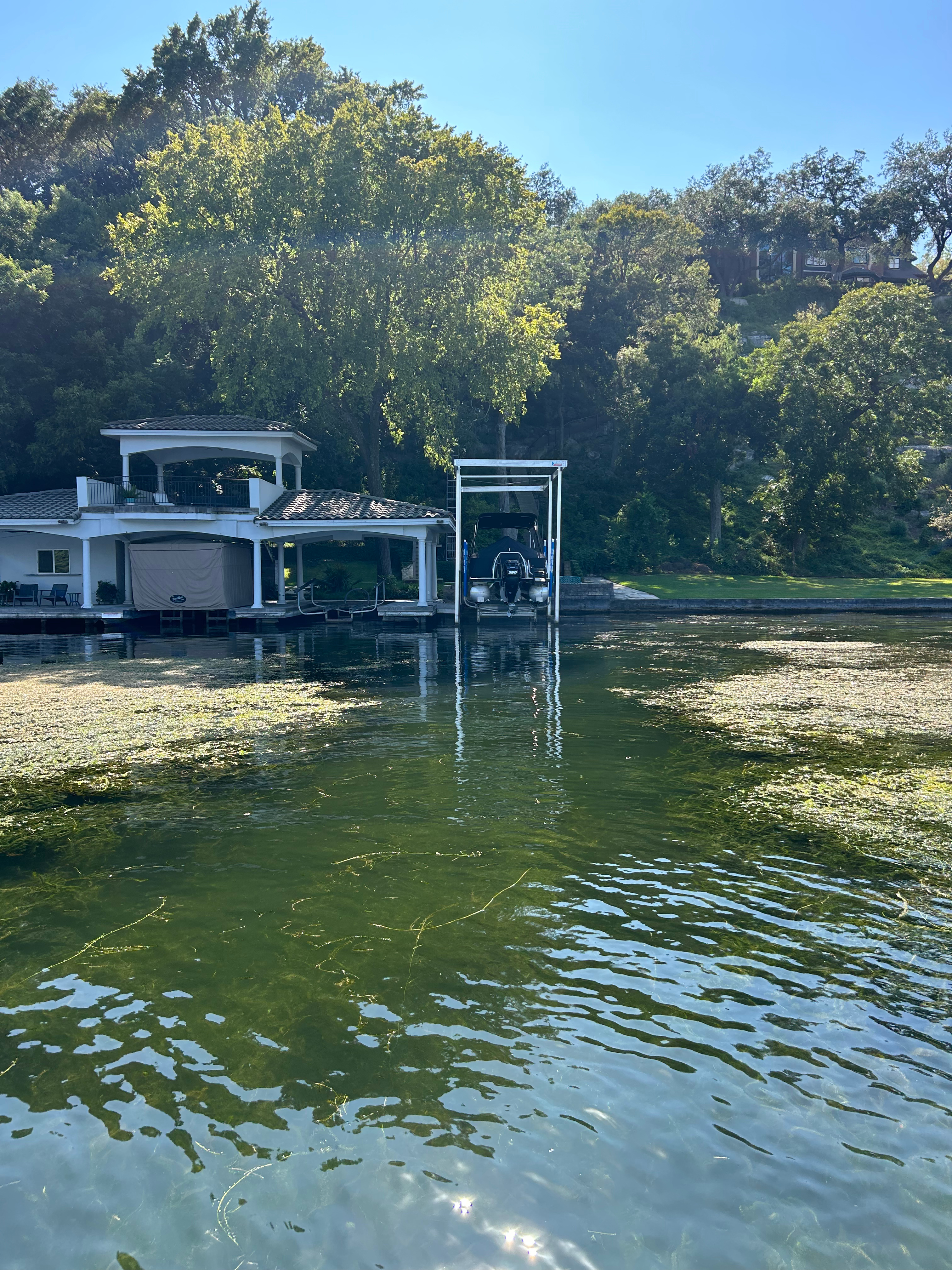
Lake Austin, Lake Travis, and the Highland Lakes system face an escalating ecological and economic crisis from hydrilla (Hydrilla verticillata) over-infestation. What began as isolated patches has transformed into dense underwater forests that threaten our lakes' recreational value, ecological health, and economic vitality.
Immediate Impacts on Austin
Safety Hazards
- Swimmer entanglement incidents (Lake Pflugerville, 2023)
- Navigation hazards for boats and watercraft
- Reduced visibility for rescue operations
- Limited emergency access to waterfront areas
Economic Damage
- Declining lakefront property values
- Lost tourism and recreation revenue
- Reduced marina and boat launch access
- Impact on local fishing industry
Ecological Degradation
- Displacement of native aquatic plants
- Oxygen depletion causing fish kills
- Habitat destruction for native species
- Water quality deterioration
Recreational Loss
- Swimming areas rendered unusable
- Dock access blocked or severely limited
- Water sports activities curtailed
- Fishing quality significantly reduced
Why Current Management Methods Are Failing Austin
The University of Florida's Center for Aquatic and Invasive Plants and the LSU AgCenter have extensively documented why traditional hydrilla management approaches often fail or, worse, accelerate the spread of this invasive species. Austin's current practices mirror these documented failures.
1. Mechanical Cutting: Spreading the Problem
The Critical Fragmentation Problem
Current mechanical cutting operations in Austin lakes create thousands of hydrilla fragments, each capable of establishing a new infestation. According to LSU AgCenter research, stem fragments as small as one inch can produce entire new plants. When cutting equipment passes through dense hydrilla beds, it essentially multiplies the problem—spreading reproductive fragments throughout the lake that will establish new colonies within weeks.
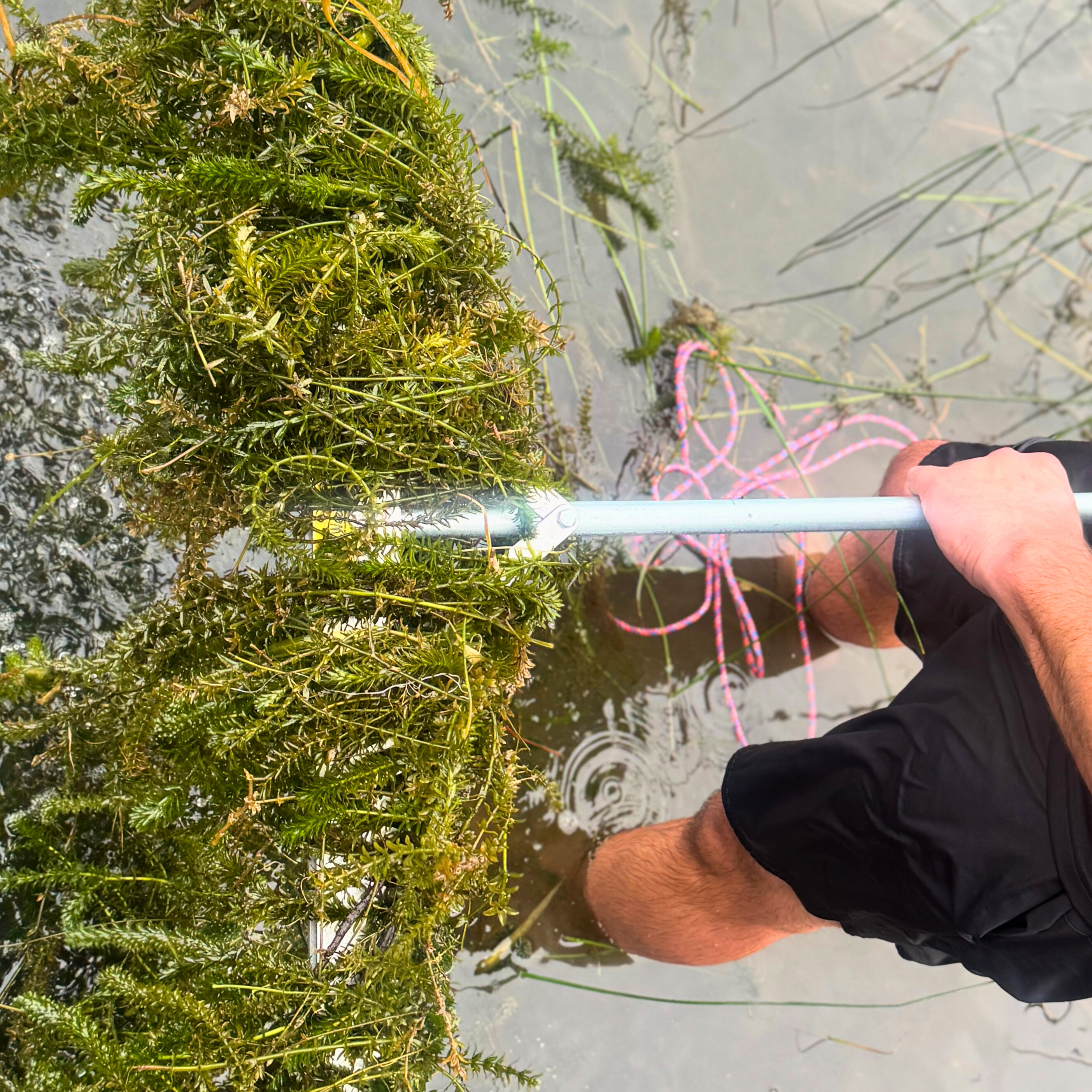
University of Florida research demonstrates that mechanical harvesting without proper fragment capture systems actually accelerates hydrilla spread. The cut fragments drift on currents, settle in new areas, and rapidly develop into dense mats—often faster than the original infestation could spread through natural growth.
2. Leaving Cut Material in the Lake: A Compounding Disaster
Perhaps the most damaging practice is leaving cut hydrilla material floating in the lake or allowing it to sink and decompose. This approach creates multiple cascading problems:
- Immediate Fragmentation Spread: Every floating fragment becomes a potential new infestation point, carried by wind and currents to pristine areas of the lake.
- Oxygen Depletion: Decomposing plant material consumes dissolved oxygen, creating hypoxic conditions that stress fish populations and can trigger fish kills. LSU AgCenter documented this phenomenon extensively in Louisiana lakes.
- Nutrient Loading: Decaying hydrilla releases nutrients back into the water column, fueling algae blooms and promoting further invasive plant growth—creating a vicious cycle.
- Tuber and Turion Persistence: Even if stems are cut, tubers and turions remain in sediment, ensuring regrowth. Cut operations that don't remove root structures are purely cosmetic and temporary.
3. Chemical Treatments: Environmental and Health Concerns
While herbicide applications can suppress hydrilla growth temporarily, research from the University of Florida's Center for Aquatic and Invasive Plants reveals significant limitations:
Limitations of Chemical Control
- Incomplete Eradication: Herbicides rarely eliminate hydrilla entirely, especially tubers deep in sediment that survive treatments
- Temporary Suppression: Effects last approximately 300 days, requiring repeated applications and ongoing costs
- Non-Target Impacts: Native beneficial aquatic plants are often harmed, creating ecological imbalance
- Water Quality Restrictions: Use limitations for swimming, fishing, and irrigation following applications
- Public Resistance: Growing community concerns about chemical exposure in recreational waters
- Regulatory Burden: Extensive permitting requirements and compliance monitoring from TPWD
4. Lack of Coordinated Management
Perhaps most critically, Austin lacks a comprehensive, coordinated hydrilla management strategy. Individual property owners implement piecemeal solutions, creating a patchwork of partially treated areas while untreated zones continue seeding new infestations throughout the lake system.
The History of Hydrilla: From Asia to America's Waterways

Origins and Introduction
Hydrilla verticillata is native to Asia, Australia, and parts of Africa, where it evolved with natural predators and environmental controls that kept populations in check. According to LSU AgCenter research, hydrilla was introduced to the United States in the 1950s through the aquarium plant trade—a decision that would prove to have devastating long-term consequences for American waterways.
The Florida Epicenter
The University of Florida's Center for Aquatic and Invasive Plants documents that hydrilla was first released into natural waterways in Miami, Florida. Within a remarkably short timeframe, it spread to Tampa and beyond. Florida's warm climate, extensive water systems, and high levels of recreational boating activity created perfect conditions for rapid expansion.
Timeline of Hydrilla Spread in the United States
- 1950s: Introduction to Florida through aquarium trade; first wild populations established in Miami
- 1960s: Rapid spread throughout Florida water systems; recognized as serious invasive threat
- 1970s: Introduction to Louisiana and other Gulf Coast states; LSU AgCenter begins research programs
- 1978: Florida legislature establishes UF/IFAS Center for Aquatic and Invasive Plants in response to crisis
- 1980s-1990s: Continued expansion to Texas, California, and other southern states
- 2000s-Present: Documented in Austin lakes; ongoing management challenges
Why Hydrilla Succeeds Where Native Plants Fail
Research from both the University of Florida and LSU AgCenter identifies key biological advantages that make hydrilla the "perfect invader":
- Multiple Reproduction Pathways: Unlike most aquatic plants that rely primarily on seeds, hydrilla reproduces through stem fragments, tubers, and turions—each method providing redundancy that makes eradication extraordinarily difficult.
- Exceptional Depth Tolerance: Hydrilla can photosynthesize in very low light conditions, allowing growth in water up to 25 feet deep—depths where most native plants cannot survive.
- Rapid Growth Rate: Under optimal conditions, hydrilla can grow over one inch per day, quickly forming dense canopies that shade out competitors.
- Phenotypic Plasticity: The plant adapts its growth form to environmental conditions, growing tall and sparse in deep water or short and dense in shallow areas.
- Lack of Natural Enemies: In its native range, hydrilla populations are controlled by specialized insects, pathogens, and herbivores. In the United States, these natural control agents are absent.
The Devastating Florida Model: A Warning for Austin
Florida's experience with hydrilla provides a sobering preview of what Austin faces without aggressive intervention. The University of Florida's research on Lake Tohopekaliga (Lake Toho)—a 19,000-acre lake in Osceola County—demonstrates the complexity and cost of managing large-scale hydrilla infestations.
Lake Tohopekaliga Case Study: Despite decades of intensive management using herbicides, mechanical harvesting, and biological control, hydrilla continues to require millions of dollars in annual treatment costs. The lake experiences recurring infestations that impact recreational fishing—a cornerstone of the local economy—and property values remain suppressed in heavily infested areas. This is Austin's future if decisive action is not taken now.
The Proposed Solution: Chain Drag Seine Net System
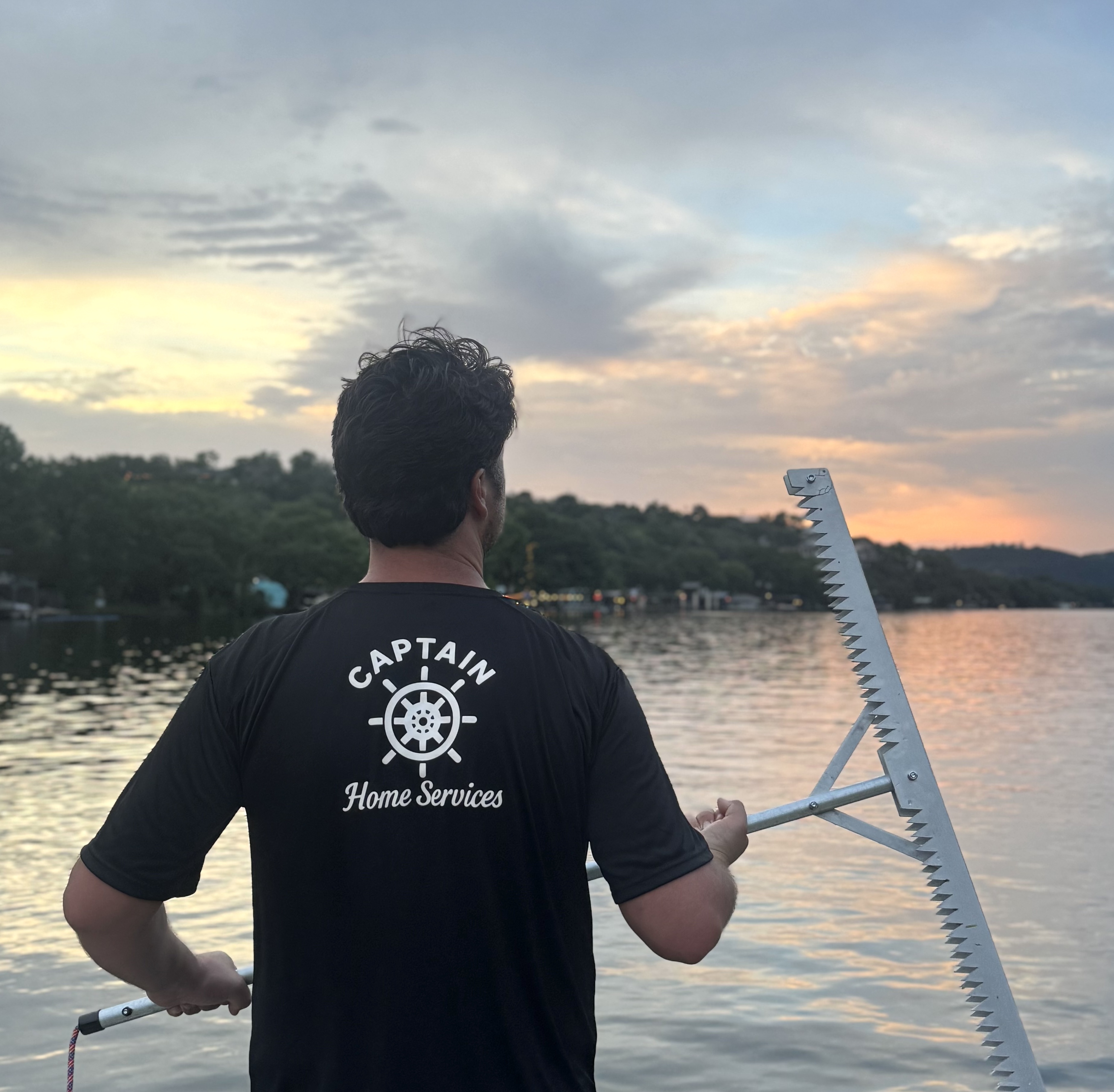
We propose implementing an innovative mechanical removal system that addresses the fundamental flaws in current management approaches. This system combines heavy-duty chain drag technology with specialized floating seine nets to achieve complete plant removal—including root structures—while capturing fragments that would otherwise spread throughout the lake.
System Components and Operation
How the Chain Drag Seine Net System Works
1. Chain Drag Component
Heavy-gauge chain arrays are dragged along the lake bottom, penetrating sediment to dislodge hydrilla plants and extract active root systems and rhizomes. While deep tubers and turions cannot be fully removed, extracting the established root networks prevents plant regrowth during the current growing season. Unlike cutting tools that leave all underground structures intact and functioning, chain dragging disrupts the root system's ability to support immediate regeneration.
2. Floating Seine Net System
Large commercial-grade seine nets with flotation systems follow immediately behind the chain drag. These nets capture both the heavy root masses pulled up by the chains and the lighter stem fragments that would otherwise float away. The seine net acts as a containment barrier, ensuring zero escape of reproductive plant material.
3. Transport and Removal
Captured plant material—roots, stems, tubers, and fragments—is consolidated within the seine net and towed by boat to designated public boat ramps. This eliminates in-lake processing that risks fragment escape.
4. Waste Management Integration
At public ramps, city-provided waste management dumpsters equipped with grapple arms efficiently load the organic material for proper disposal. The hydrilla biomass is removed from the lake ecosystem entirely, preventing nutrient recycling that fuels reinfestation.
Why This System Succeeds Where Others Fail
Root System Removal Prevents Current-Season Regrowth
While tubers and turions deep in sediment cannot be fully removed by any mechanical method, chain dragging physically extracts the active root systems and rhizomes. By removing these established root networks, the method eliminates the plant's ability to regrow during the current season. This provides several months of clear water while tubers remain dormant, allowing time for follow-up treatments or seasonal management strategies.
Zero Fragment Escape
The integrated seine net system captures 100% of plant material, eliminating the fragmentation problem that causes current cutting operations to spread hydrilla throughout the lake system.
Complete Biomass Removal
All above-ground plant material and extracted root systems are removed from the lake, preventing oxygen depletion from decomposition and eliminating nutrient recycling that perpetuates the infestation cycle. While dormant tubers remain in sediment, removing the active plant biomass significantly reduces immediate regrowth pressure.
No Chemical Introduction
This mechanical approach avoids all chemical treatments, eliminating concerns about water quality, fish health, recreational restrictions, and long-term environmental impacts.
Scalable Operations
The system can be deployed at any scale—from targeted residential areas to large public zones—allowing flexible, cost-effective management tailored to specific lake conditions and budget constraints.
Immediate Results
Unlike herbicides that require weeks to take effect or biological controls that work slowly over seasons, mechanical removal provides immediate visible results that restore recreational access and demonstrate progress to the community.
Global Success Stories: Proven Results in Asia and California
Asian Origins and Refinement
Chain drag methods for aquatic vegetation control have been used extensively in Asian irrigation systems for decades. In rice-growing regions of China, Japan, and other Asian countries, irrigation canals require regular maintenance to remove aquatic weeds that obstruct water flow. Traditional mechanical methods, including chain dragging along canal bottoms to uproot vegetation, evolved in these agricultural regions where chemical treatments were often impractical or restricted near food production areas. 10
While hydrilla is native to Asia and mechanical removal techniques have long been practiced there, detailed technical documentation of chain drag systems is more readily available from Western irrigation districts that adopted and refined these methods.
California's Success: Irrigation Canal Experience and Hydrilla Eradication
California has extensive experience with both chain drag technology for aquatic vegetation control and hydrilla eradication. The University of California Cooperative Extension documents that chain dragging has been widely used in California irrigation canals for decades. "Chaining is a method that requires less customized machinery in that it uses a heavy chain linked between two vehicles that drive on either side of the canal. The chain is dragged along the profile of the canal, pulling up weeds and disrupting the seedbed as it goes." 11
Water districts throughout California historically relied on this method, with crews using "heavy anchor chains dragged behind tractors to remove weeds" from canal systems. 12 While some districts have shifted to chemical treatments in recent years, the mechanical expertise and equipment remain part of California's water management infrastructure.
This mechanical removal experience proved valuable when California faced its hydrilla crisis. When hydrilla was discovered in California waters in 1985, Governor George Deukmejian declared a "State of Emergency," recognizing the catastrophic economic and ecological threat. The California Department of Food and Agriculture launched the Hydrilla Eradication Program, which deployed multiple strategies including manual removal, targeted dredging, and mechanical harvesting with fragment containment.
California's Remarkable Achievement
Of 29 separate waterbodies in which hydrilla was discovered, California successfully eradicated the invasive plant from 20 of them. This 69% eradication success rate stands in stark contrast to management-only approaches in Florida and Louisiana, where complete eradication has never been achieved. The key difference: California's commitment to complete plant removal rather than ongoing suppression.
Critical Success Factors from Global Experience
Analysis of successful hydrilla eradication programs worldwide reveals consistent themes:
- Early Aggressive Intervention: Programs that achieved eradication acted swiftly with intensive initial efforts, preventing establishment of extensive tuber banks in sediment.
- Complete Biomass Removal: Successful programs removed all plant material from water bodies, eliminating both immediate fragmentation risks and long-term nutrient cycling.
- Root-Level Extraction: Mechanical methods that removed underground structures proved far more effective than surface cutting or herbicide suppression.
- Coordinated Management: Whole-lake or whole-system approaches prevented reinfestation from untreated adjacent areas.
- Government Leadership: Successful programs featured strong governmental coordination, funding, and regulatory support rather than relying on fragmented private efforts.
Implementation Plan for Austin

Phase 1: Pilot Program (Months 1-6)
Pilot Program Objectives
- Site Selection: Identify 2-3 heavily infested demonstration sites on Lake Austin representing different depth profiles and hydrilla densities
- Equipment Deployment: Deploy chain drag seine net systems with commercial operators and trained crews
- Baseline Assessment: Document pre-treatment hydrilla coverage, density, and tuber concentrations through underwater surveys
- Treatment Operations: Execute removal operations with full documentation of methods, timelines, and material volumes
- Effectiveness Monitoring: Conduct monthly post-treatment assessments to measure regrowth rates and compare to untreated control areas
- Community Engagement: Host public demonstrations and educational sessions to build support for expanded implementation
Phase 2: Expanded Implementation (Months 7-24)
Based on pilot program results, expand operations to priority areas throughout Lake Austin and Lake Travis:
- High-Use Recreational Zones: Public swimming beaches, boat launches, and marina approaches
- Safety-Critical Areas: Emergency access points, designated swimming areas, and rescue operation zones
- Ecological Priority Zones: Native plant restoration sites and critical habitat areas
- Residential Waterfront: Coordinated neighborhood-level programs for lakefront property owners
Phase 3: System-Wide Management (Year 3+)
Transition to comprehensive, ongoing management across the entire Highland Lakes system:
Long-Term Management Framework
- Establish permanent chain drag seine net fleet with year-round crews
- Implement regular monitoring program with GIS mapping of hydrilla distribution
- Deploy rapid response capability for new infestation detection
- Coordinate with LCRA, TPWD, and adjacent jurisdictions for integrated management
- Maintain permanent waste management infrastructure at public boat ramps
- Continue public education programs on prevention and early detection
Infrastructure Requirements
Equipment
- Commercial-grade chain drag systems
- Large-scale floating seine nets
- Work boats and towing vessels
- GPS and GIS mapping equipment
- Underwater survey technology
Waste Management
- Grapple-arm equipped dumpsters
- Designated removal stations at public ramps
- Organic waste processing partnerships
- Composting facility access
- Landfill coordination
Personnel
- Trained equipment operators
- Boat captains and crew
- Aquatic plant specialists
- Monitoring and assessment staff
- Public outreach coordinators
Regulatory Coordination
Successful implementation requires coordination with multiple regulatory entities:
- Texas Parks and Wildlife Department (TPWD): Secure necessary permits for aquatic vegetation removal in public waters
- Lower Colorado River Authority (LCRA): Coordinate with lake management policies and water level operations
- City of Austin Environmental Department: Align with local water quality and environmental protection standards
- Army Corps of Engineers: Ensure compliance with federal navigable waters regulations
- Travis County and adjacent jurisdictions: Coordinate multi-jurisdictional efforts for comprehensive coverage
Strategic Partnership: Commercial Seine Net Supplier
Captain Home Services proposes partnering with Custom Netting by CNW, a leading manufacturer of commercial-grade seine nets with extensive experience in aquatic vegetation management applications. CNW specializes in custom-designed seine nets for large-scale water management projects and has supplied equipment for similar hydrilla removal operations in California and other states.
Partnership Benefits
Technical Expertise
CNW brings decades of experience designing seine net systems optimized for aquatic plant removal, including specialized flotation configurations, mesh sizing for maximum fragment capture, and handling systems for efficient loading operations.
Custom Engineering
Seine nets will be custom-engineered for Lake Austin's specific conditions, including depth profiles, typical wind and current patterns, and integration with chain drag equipment specifications.
Proven Durability
Commercial-grade materials and construction ensure equipment longevity under continuous use conditions, reducing long-term replacement costs and operational downtime.
Training and Support
CNW provides comprehensive operator training, ongoing technical support, and maintenance services to ensure optimal performance throughout the program lifecycle.
System Specifications
Seine nets for Austin's hydrilla management program will feature:
- Large Scale: Nets ranging from 100 to 500 feet in length to accommodate varying operational areas
- Optimized Mesh: Mesh sizing designed to capture hydrilla fragments while allowing water flow for efficient towing
- Robust Flotation: Commercial-grade float lines ensuring surface containment even under heavy plant loads
- Weighted Bottom Lines: Heavy-duty lead lines maintaining bottom contact to prevent plant escape under the net
- Reinforced Construction: High-strength netting materials resistant to abrasion from plant material, chains, and lake bottom contact
- Quick-Release Systems: Efficient loading mechanisms for rapid transfer to waste containers at boat ramps
Call to Action: The Time to Act is Now

Austin stands at a critical decision point. We can continue with ineffective management approaches that spread hydrilla through fragmentation, leave decaying plant matter in our lakes, and rely on chemical treatments that provide only temporary suppression—or we can implement a proven mechanical removal system that addresses the root causes of infestation and offers genuine hope for restoration.
Lessons from Florida's Failures
Florida's experience demonstrates that delay only increases costs and reduces effectiveness. Today, Florida spends millions of dollars annually managing hydrilla in lakes where it is now permanently established. Early intervention when infestations are still manageable offers the only realistic path to eradication rather than perpetual suppression.
The California Model: Government Leadership for Public Good
California's success in eradicating hydrilla from 20 of 29 infected waterbodies resulted from decisive government action, comprehensive funding, and commitment to complete removal rather than ongoing management. Austin must follow this model rather than the Florida example of delayed response and inadequate intervention.
Community Benefits of Aggressive Action
Environmental Restoration
- Restored native plant communities
- Improved water quality and clarity
- Enhanced fish habitat and populations
- Reduced algae bloom frequency
Economic Revitalization
- Increased lakefront property values
- Enhanced tourism and recreation revenue
- Improved marina and boat rental business
- Reduced long-term management costs
Public Safety
- Eliminated entanglement hazards
- Restored emergency access routes
- Improved navigation safety
- Enhanced visibility for rescue operations
Community Pride
- Restored iconic Austin swimming areas
- Reclaimed public recreational spaces
- Demonstrated environmental leadership
- Created model for other Texas cities
What Austin Needs from City Leadership
1. Declare Hydrilla a Public Emergency
Following California's example, formal recognition of the crisis enables expedited permitting, emergency funding access, and coordinated multi-agency response.
2. Commit Funding for Pilot Program
Allocate initial funding for a 6-month pilot program demonstrating chain drag seine net effectiveness on Lake Austin demonstration sites.
3. Establish Inter-Agency Task Force
Create a coordinating body bringing together City of Austin, LCRA, TPWD, Travis County, and other stakeholders to develop comprehensive management strategy.
4. Provide Waste Management Infrastructure
Install grapple-arm equipped dumpsters at public boat ramps and establish organic waste disposal protocols for removed hydrilla biomass.
5. Develop Long-Term Funding Mechanism
Establish dedicated funding stream through lake user fees, environmental bonds, or other sustainable mechanisms ensuring multi-year program continuity.
A Vision for Austin's Lakes
Imagine Lake Austin three years from now: clear waters where families swim safely without fear of entanglement; thriving native plant communities supporting diverse fish populations; restored property values along the waterfront; bustling marinas serving recreational boaters; and Austin recognized nationally as a leader in innovative, sustainable aquatic resource management.
This vision is achievable—but only if we act decisively now. The chain drag seine net system offers proven technology, backed by successful implementations worldwide, that addresses the fundamental failures of current management approaches.
The Question for Austin: Will we follow Florida's path of delayed response, escalating costs, and permanent infestation—or California's example of aggressive intervention, innovative technology, and genuine restoration?
Join the Movement for Lake Restoration
Contact Captain Home Services to learn more about the chain drag seine net proposal, schedule demonstrations for city leaders, or discuss partnership opportunities for implementing this innovative system in Austin.
References and Resources
- Louisiana State University AgCenter. "Hydrilla - Invasive Aquatic Species." LSU AgCenter Publications. Comprehensive resource on hydrilla biology, spread patterns, and management approaches. https://www.lsuagcenter.com/topics/environment/invasive%20species/hydrilla
- University of Florida, IFAS Center for Aquatic and Invasive Plants. "Hydrilla verticillata - Plant Directory." Detailed botanical and management information from leading research institution. https://plant-directory.ifas.ufl.edu/plant-directory/hydrilla-verticillata/
- University of Florida, IFAS Center for Aquatic and Invasive Plants. "About CAIP." History and mission of the Center established in response to Florida's hydrilla crisis. https://plants.ifas.ufl.edu/about/
- University of Florida, IFAS. "Handling Hydrilla: How UF Research Helps Reveal Stakeholder Preferences for Invasive Aquatic Species Management." Research on management preferences and effectiveness. UF IFAS Blog
- California Department of Food and Agriculture. "Hydrilla Eradication Program." Documentation of California's successful eradication efforts in 20 of 29 infected waterbodies. https://www.cdfa.ca.gov/plant/ipc/hydrilla/hydrilla_hp.html
- Cornell Cooperative Extension. "Successful U.S. Eradication Efforts - Hydrilla Management." Case studies of successful hydrilla eradication programs. Cornell Cooperative Extension
- KXAN News Austin. "Dense aquatic vegetation prompts safety concerns at Lake Pflugerville." July 2023. Local reporting on swimmer entanglement incidents. KXAN Article
- Texas Parks and Wildlife Department. "Aquatic Invasive Species." State regulatory framework and prevention programs. TPWD Website
- Custom Netting by CNW. "Seine Nets for Commercial Applications." Seine net specifications and custom engineering services. CNW Netting
- Ministry of Agriculture, Forestry and Fisheries of Japan. "Baseline Document for Discussion - International Network on Water and Ecosystem in Paddy Fields (INWEPF)." Documentation of irrigation canal maintenance practices in Asian rice-growing regions. MAFF Japan
- University of California Agriculture and Natural Resources. "A Primer on Irrigation Canal Weeds." UC Weed Science Blog. Detailed documentation of mechanical weed control methods including chain dragging in California irrigation systems. https://ucanr.edu/blogs/blogcore/postdetail.cfm?postnum=53532
- Irrigation Leader Magazine. "Tackling Aquatic Weeds at the Twin Falls Canal Company." Historical use of chain dragging by California water districts for aquatic vegetation management. Irrigation Leader
Proposal Prepared By: Captain Home Services - Professional Lake Weed Management
For: Austin City Council, LCRA Board of Directors, Travis County Commissioners Court, TPWD Leadership, and Austin Community Stakeholders
Related Topics: austin hydrilla management, Lake Austin chain drag, seine net hydrilla removal, austin invasive species, sustainable lake management, mechanical hydrilla removal, Lake Austin restoration, Highland Lakes management, hydrilla eradication Austin, aquatic weed control Austin, Lake Travis invasive species, TPWD aquatic vegetation, LCRA lake management, Austin environmental initiatives